Transitional Living Room Design: The Ultimate Guide to Timeless Elegance
Hey there! I’m Sarah, an interior designer with 15 years of experience creating beautiful living spaces. Today, I’m sharing my foolproof approach to transitional living room design that’s worked wonders for hundreds of my clients.
The Perfect Balance: What Makes Transitional Style Special
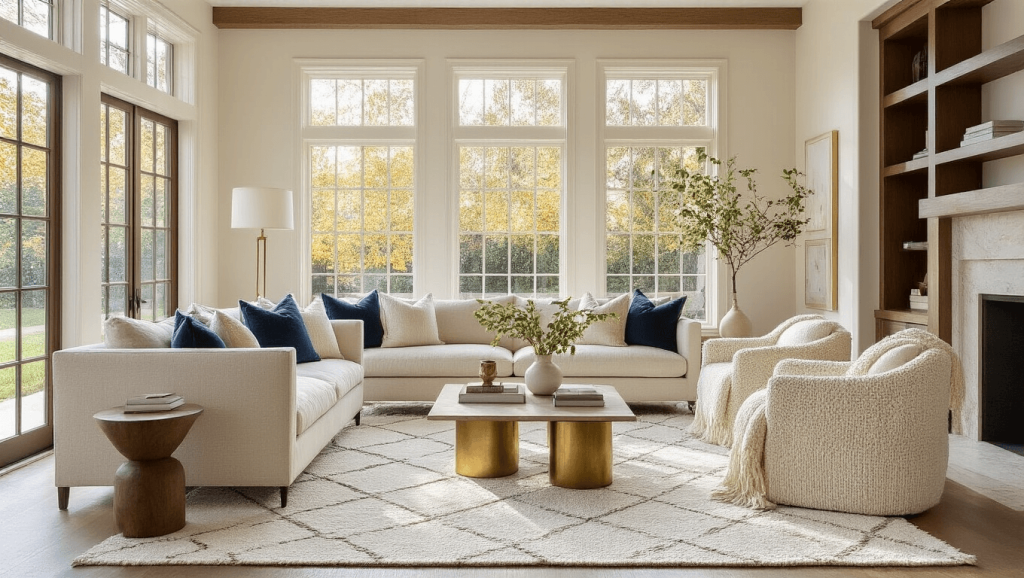
Transitional design is like that perfect playlist that mixes classic hits with modern beats. It’s where traditional comfort meets contemporary clean lines, and trust me, it’s easier to achieve than you might think.
Time & Budget Reality Check:
- Setup time: 1-2 days for basics, a few extra hours for styling
- Budget range: $2,000-$10,000 (but I’ll share some clever budget hacks!)
- Space flexibility: Works in 200–2,000 square feet
- Skill level needed: Anyone can do this!
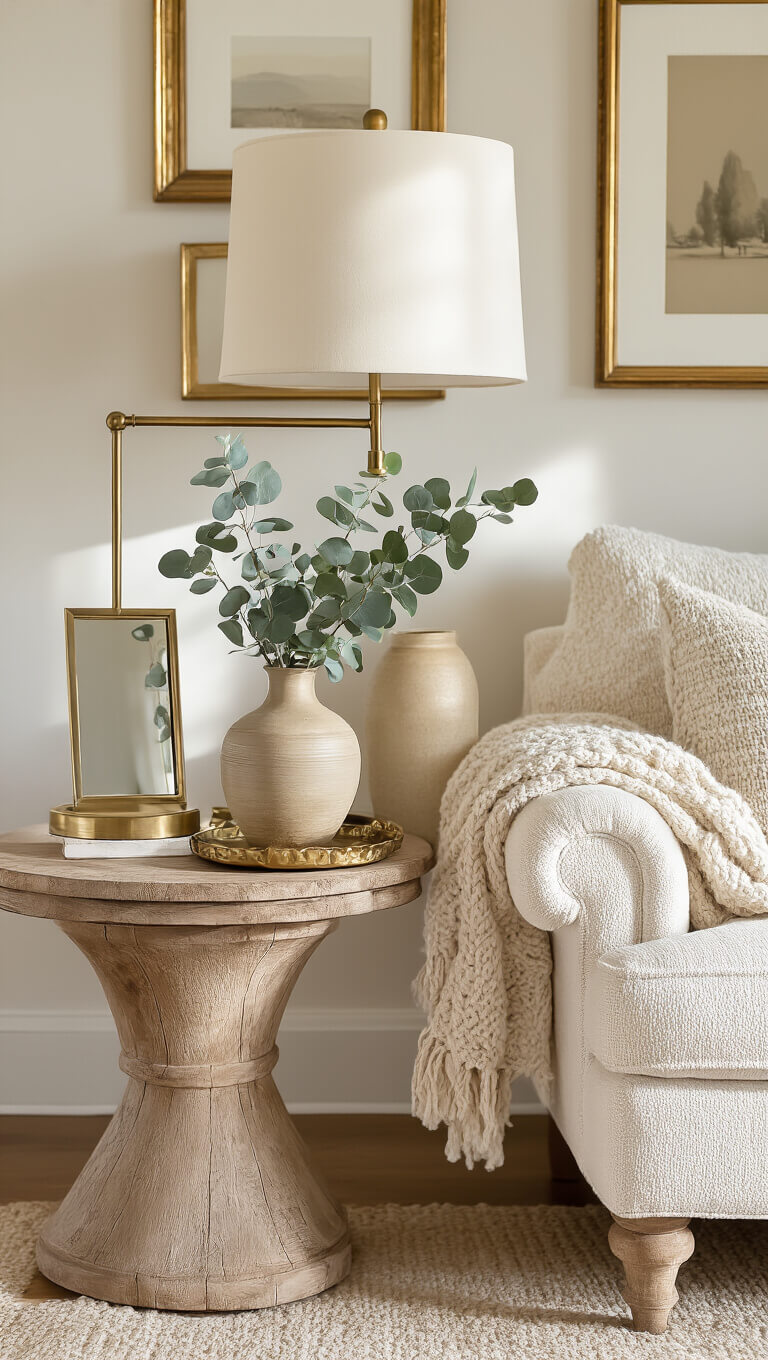
Getting Started: The Foundation Pieces
Let’s talk about your must-haves (I learned these the hard way after countless room makeovers):
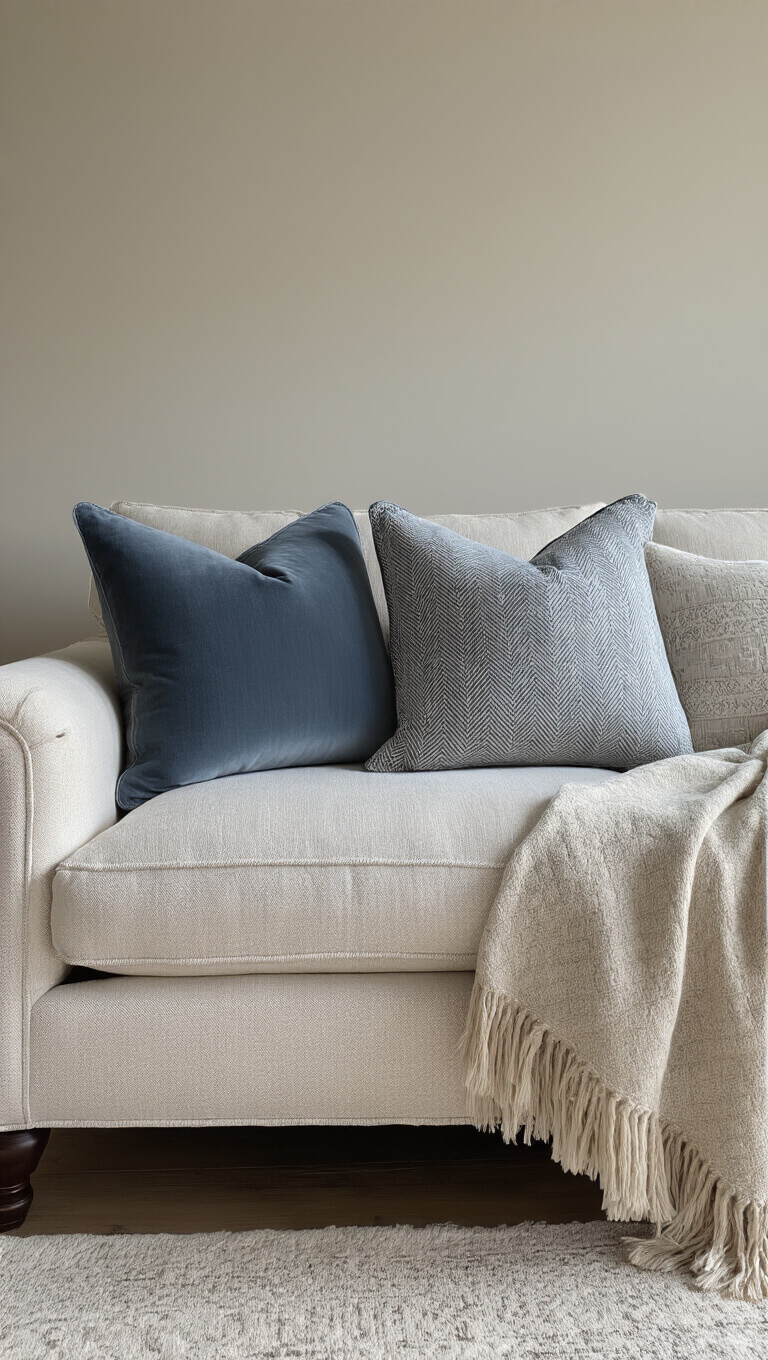
1. The Sofa
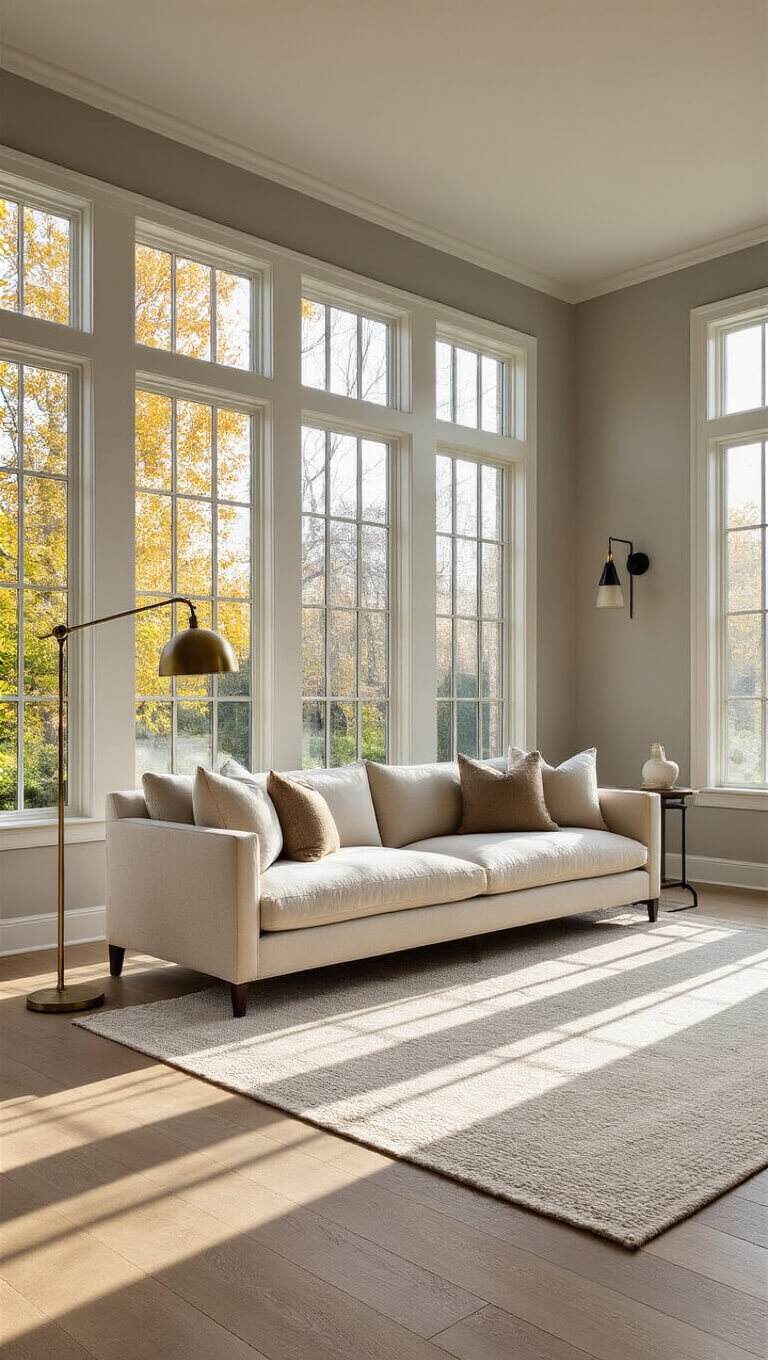
Choose a clean-lined sofa in a neutral shade. My go-to is the Hampton from Pottery Barn in ‘Oatmeal’ – it’s basically bulletproof for families.
2. The Rug
Go big or go home! A 9×12 neutral rug with subtle pattern creates the perfect foundation. Pro tip: Leave 18 inches of floor showing around the edges.
3. Statement Lighting
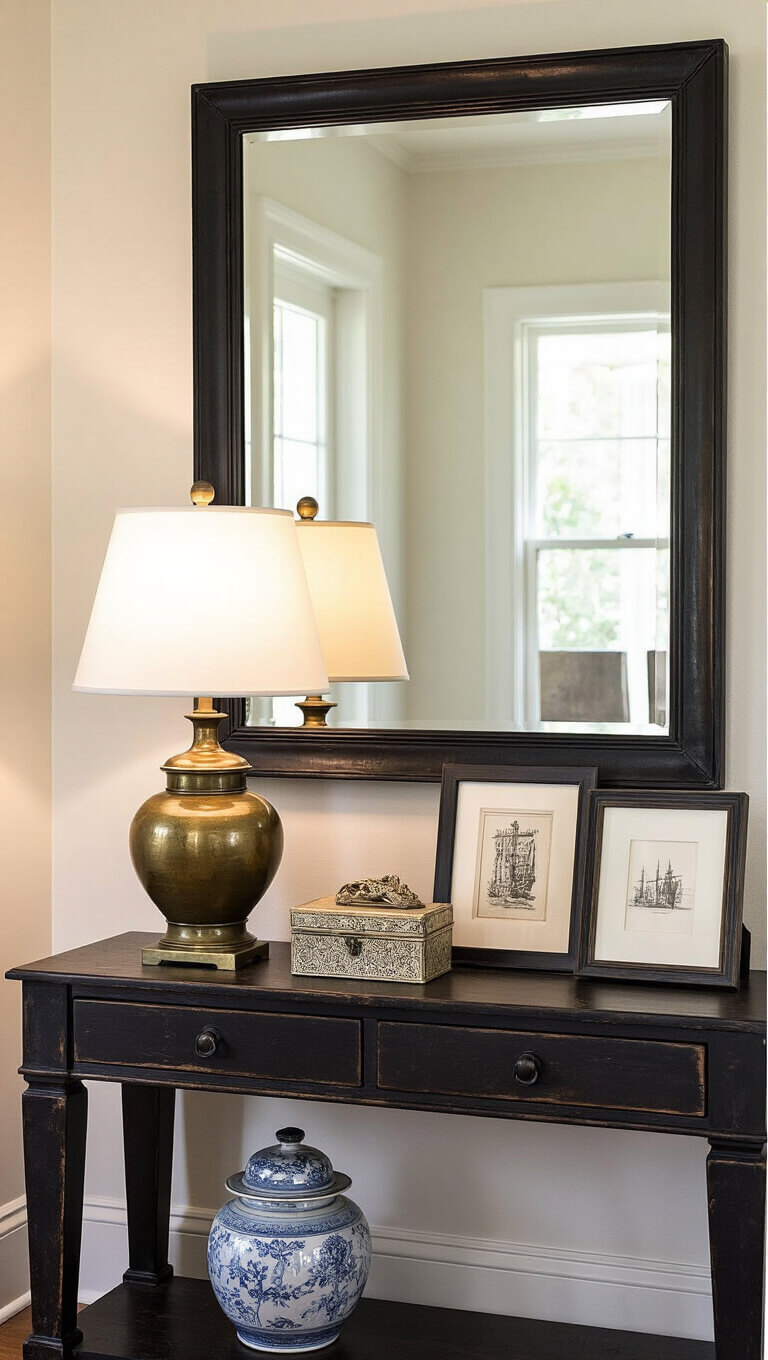
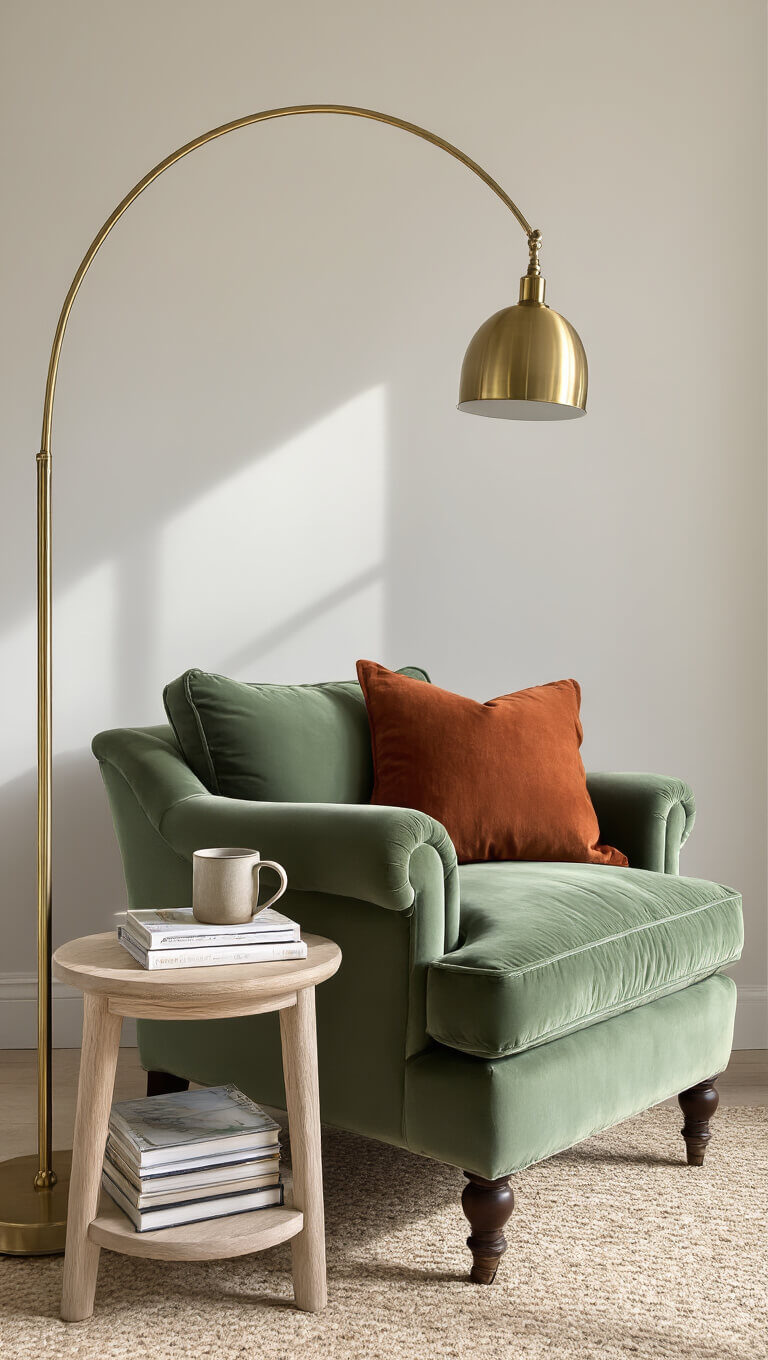
Mix metals! I love pairing a brass floor lamp with black sconces. Trust me, it works.
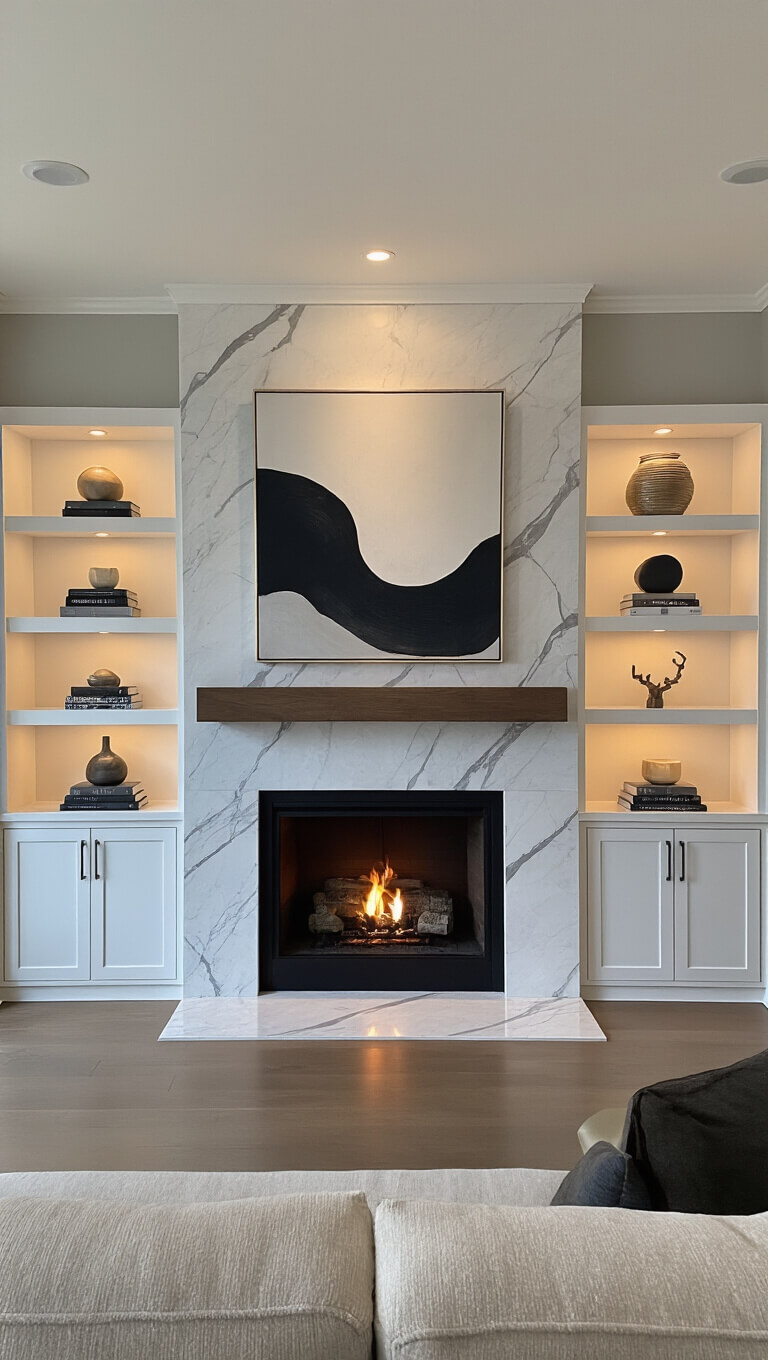
Color Palette That Never Fails:
- Base: Warm greys, creamy whites
- Accents: Navy, sage green, rust
- Metallics: Mixed metals (yes, you can!)
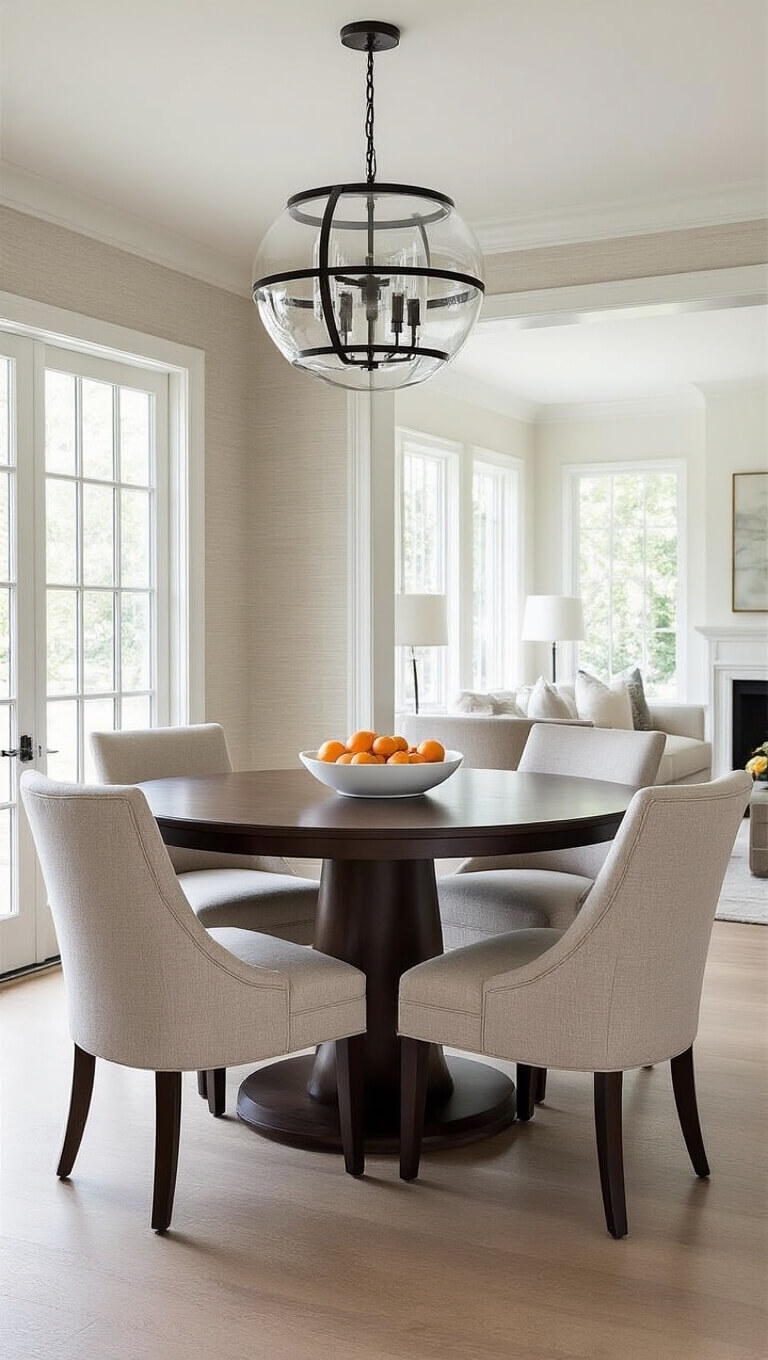
Styling Secrets (That Nobody Talks About)
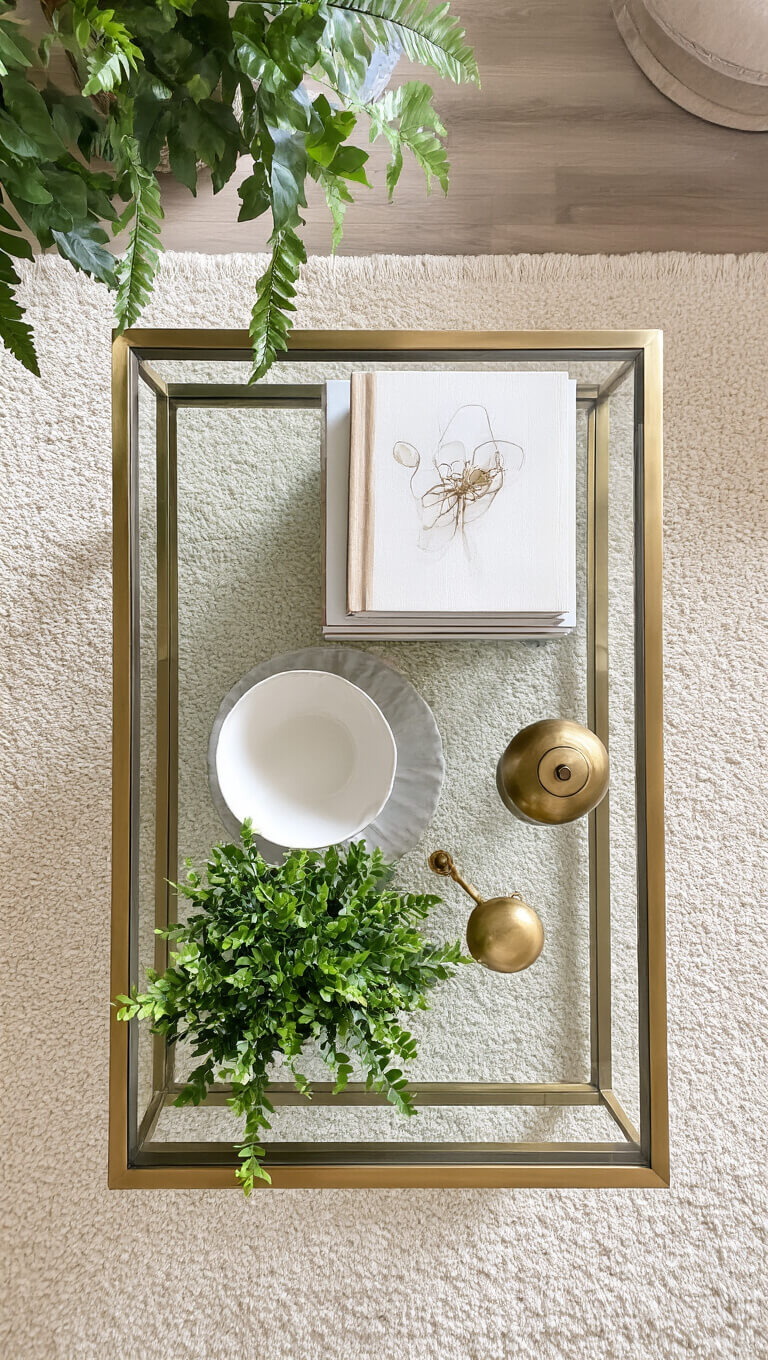
1. The Rule of Three
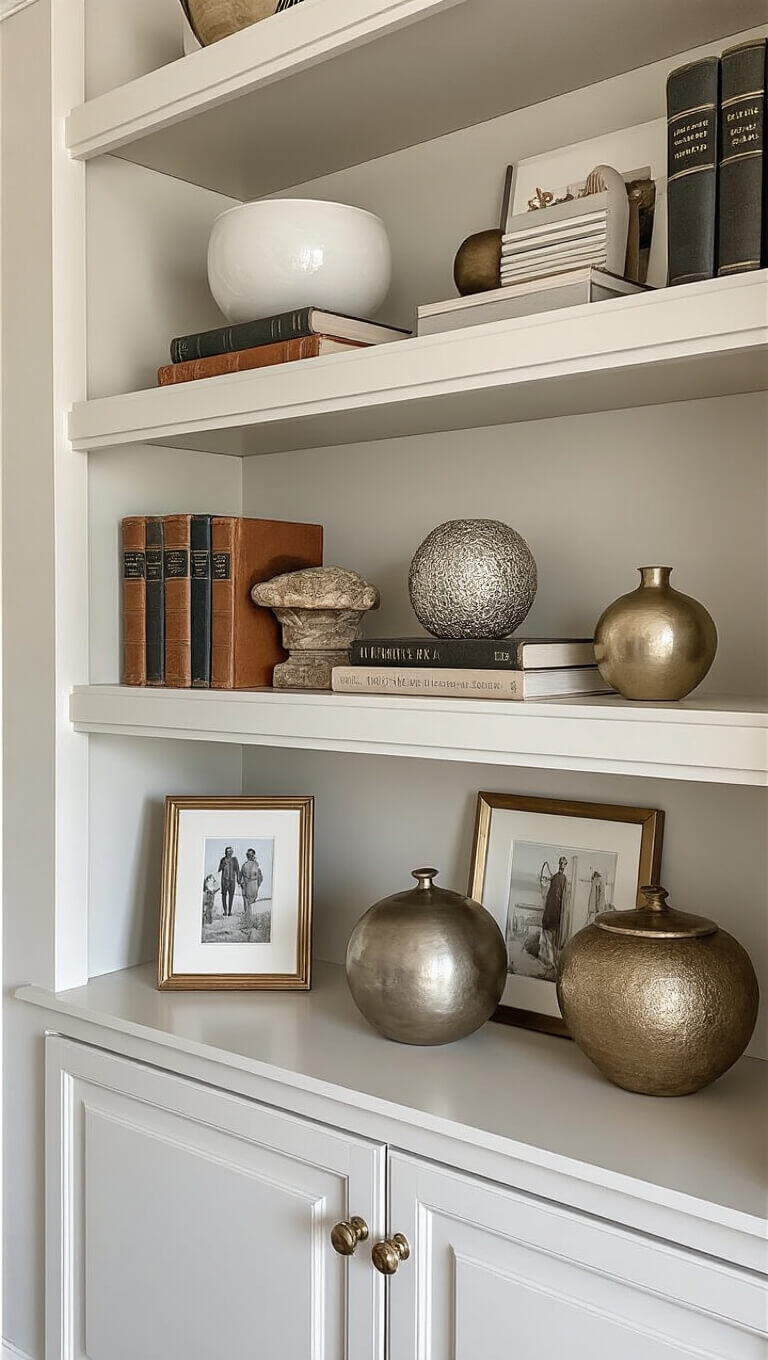
- Group accessories in threes
- Vary heights within each grouping
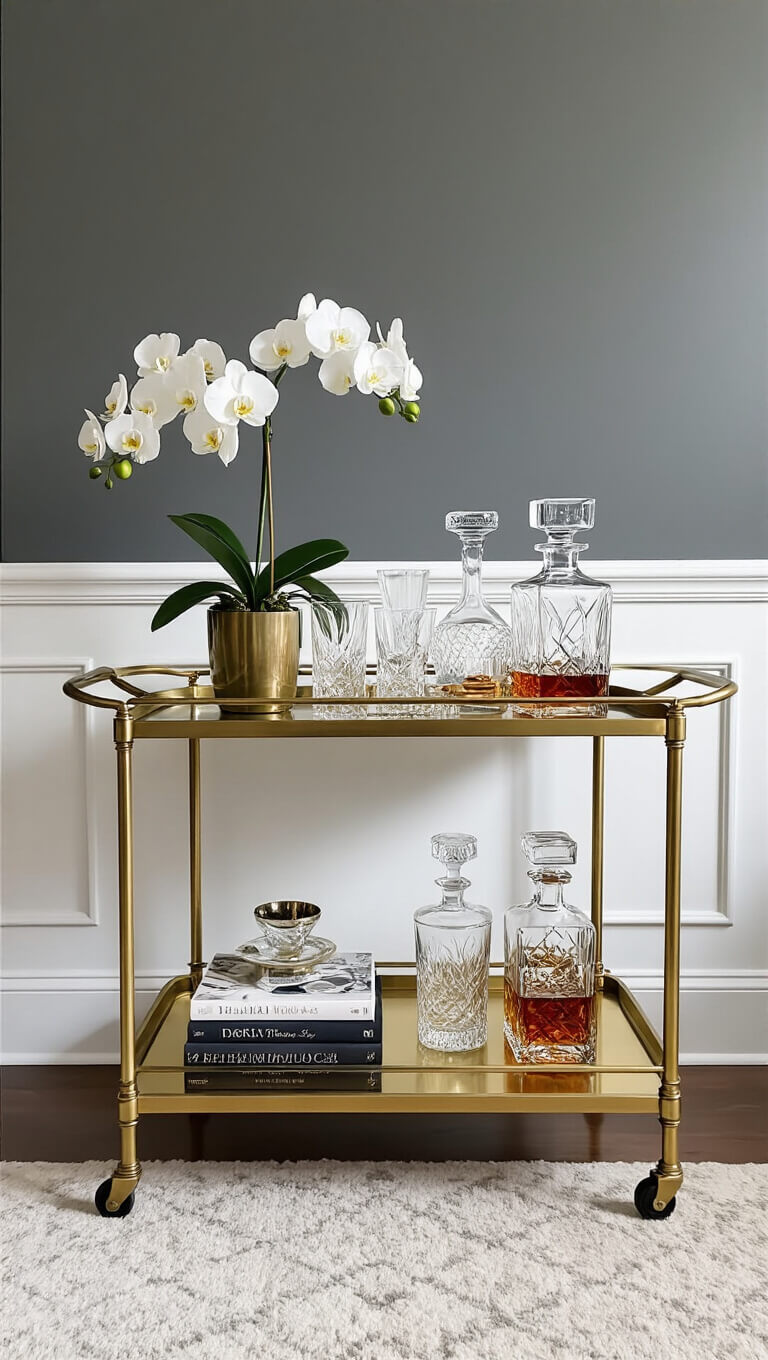
- Mix textures (glass, metal, wood)
2. Pillow Perfection
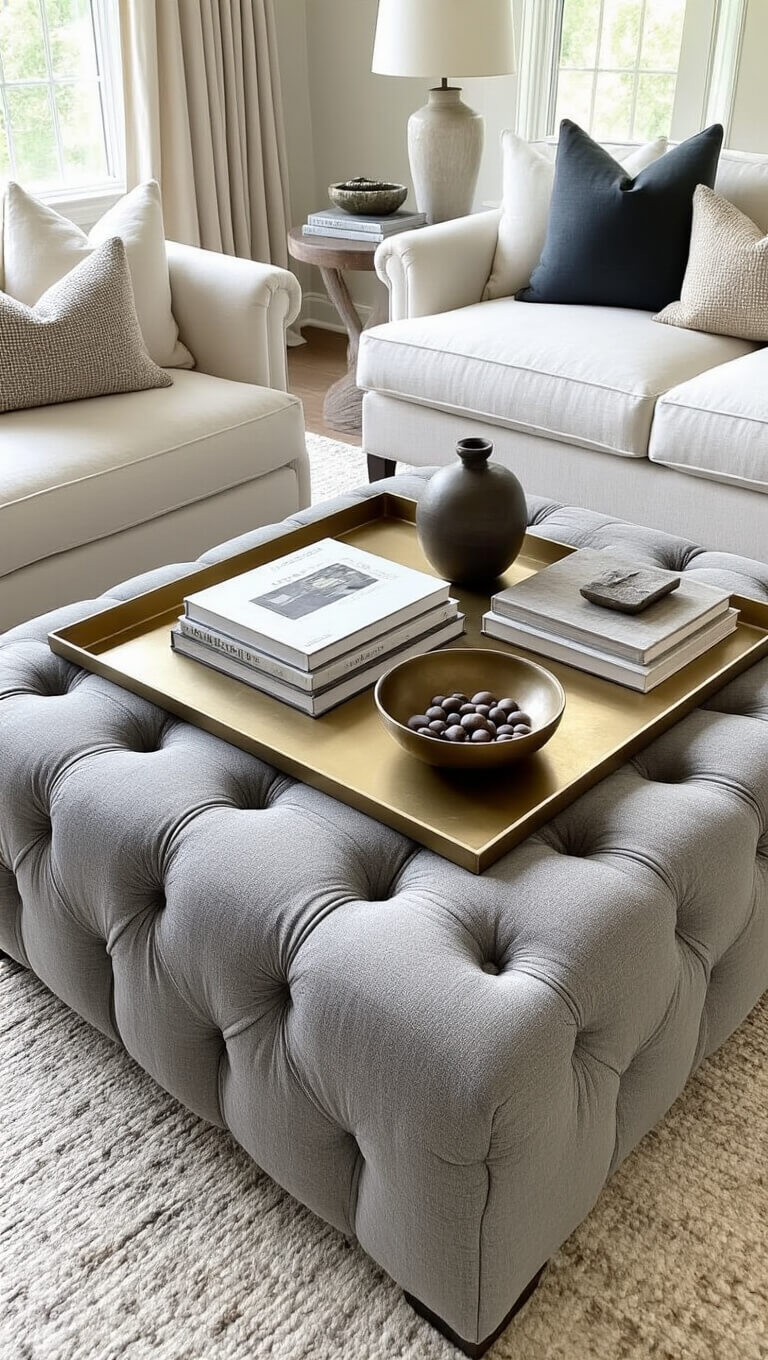
- Two 22″ squares on each sofa end
- One lumbar in the middle
- Keep patterns subtle, textures rich
Smart Money-Saving Tricks:
- Shop end-of-season sales for big pieces
- Mix high-end anchor pieces with budget-friendly accessories
- Update existing furniture with new hardware
Save this article
Enter your email and we'll send it straight to your inbox.
Common Mistakes to Avoid:
Listen, I’ve made these mistakes so you don’t have to:
- Pushing furniture against walls (float it!)
- Choosing a rug that’s too small
- Overdoing the throw pillows (yes, there is such a thing)
Seasonal Updates Made Easy
Keep your base neutral and swap these seasonal elements:
Spring/Summer:
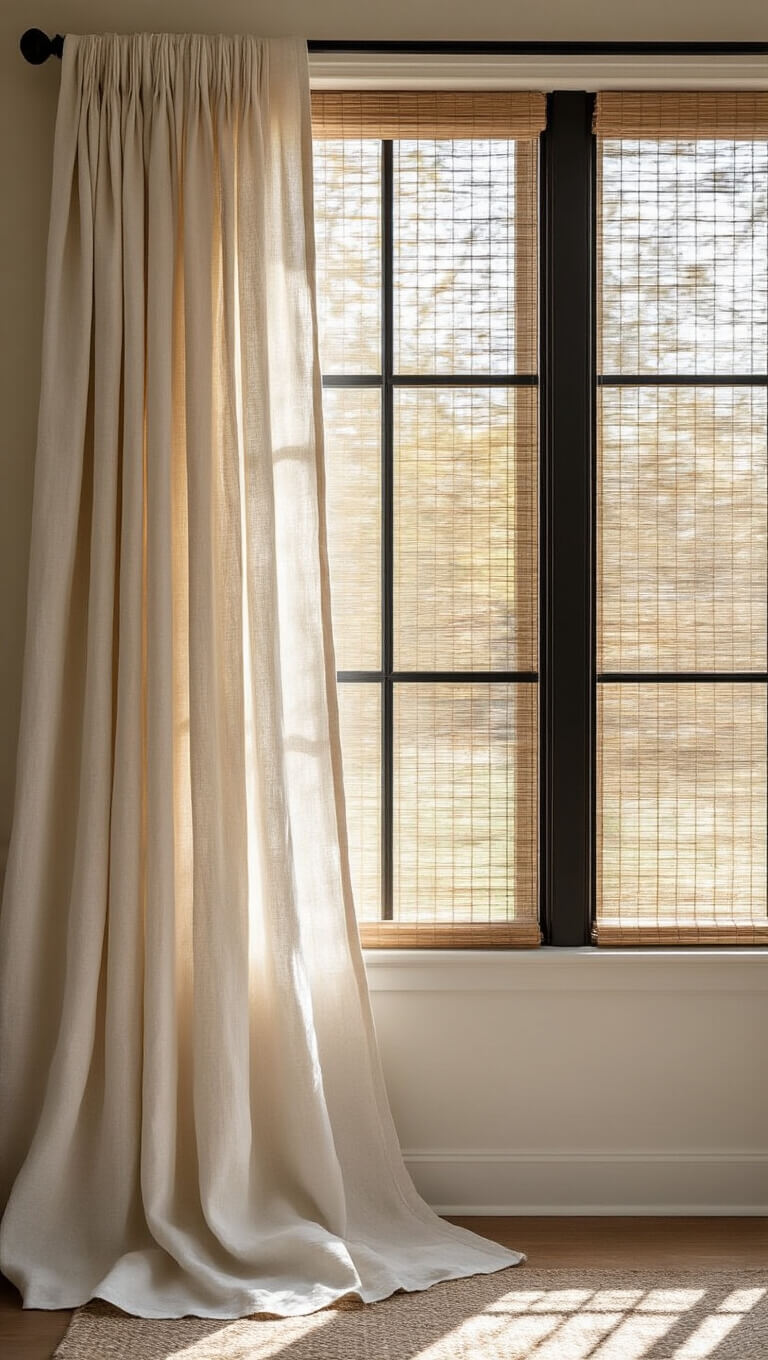
- Light linen throws
- Fresh greenery
- Coastal blue accents
Fall/Winter:
- Chunky knit throws
- Warm metallic accessories
- Rich velvet pillows
Remember: transitional style is about balance. When in doubt, step back and ask yourself: “Would this look as good in five years as it does today?”
Final Pro Tips:
- Invest in quality for your largest pieces
- Keep breathing room between furniture
- Layer lighting at three heights
- Add personality through art and accessories
The beauty of transitional style is its staying power. It’s not about chasing trends – it’s about creating a space that feels both fresh and timeless.
Now go forth and create your perfect transitional living room! And remember, if you hit
Save this article
We'll email you the link so you can come back to it.