Let’s face it – working with a small living room can feel like solving a puzzle while blindfolded.
I furnished a 140 square foot living room for a client who thought she needed a sectional, and we ended up with two slim chairs instead. Living room designs for small spaces work when the furniture sits off the walls and the eye can travel past it, which makes the room read larger than the tape measure says.
The Magic Layout Formula
First things first – your layout is everything.
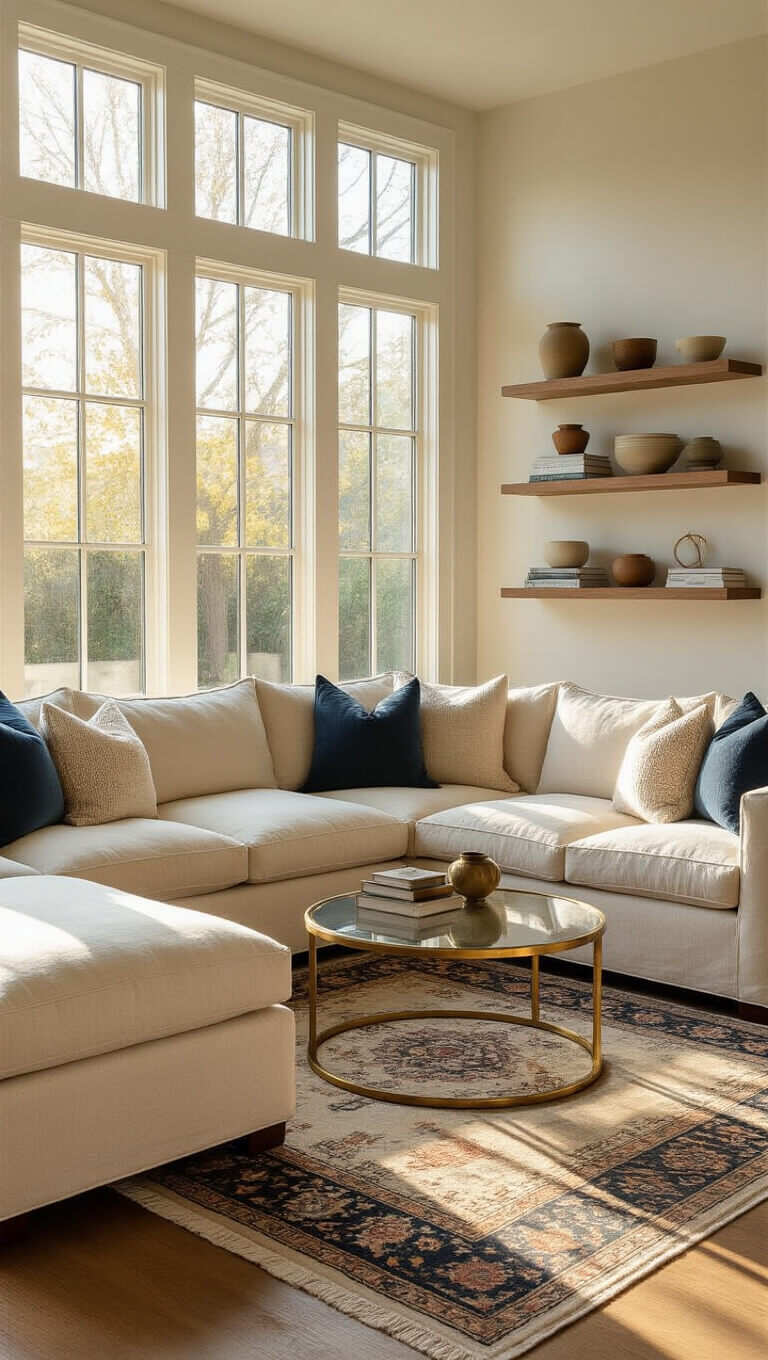
I always start by positioning an L-shaped sofa or compact sectional in the corner.
This instantly creates a conversation area while keeping traffic flow smooth (no more awkward shuffling around furniture!).
Smart Furniture Choices That Pack a Punch
Here’s what I swear by:
- Modular pieces that transform based on your needs
- Ottoman coffee tables with hidden storage
- Wall-mounted shelves instead of bulky bookcases
- Nesting tables that tuck away when not needed
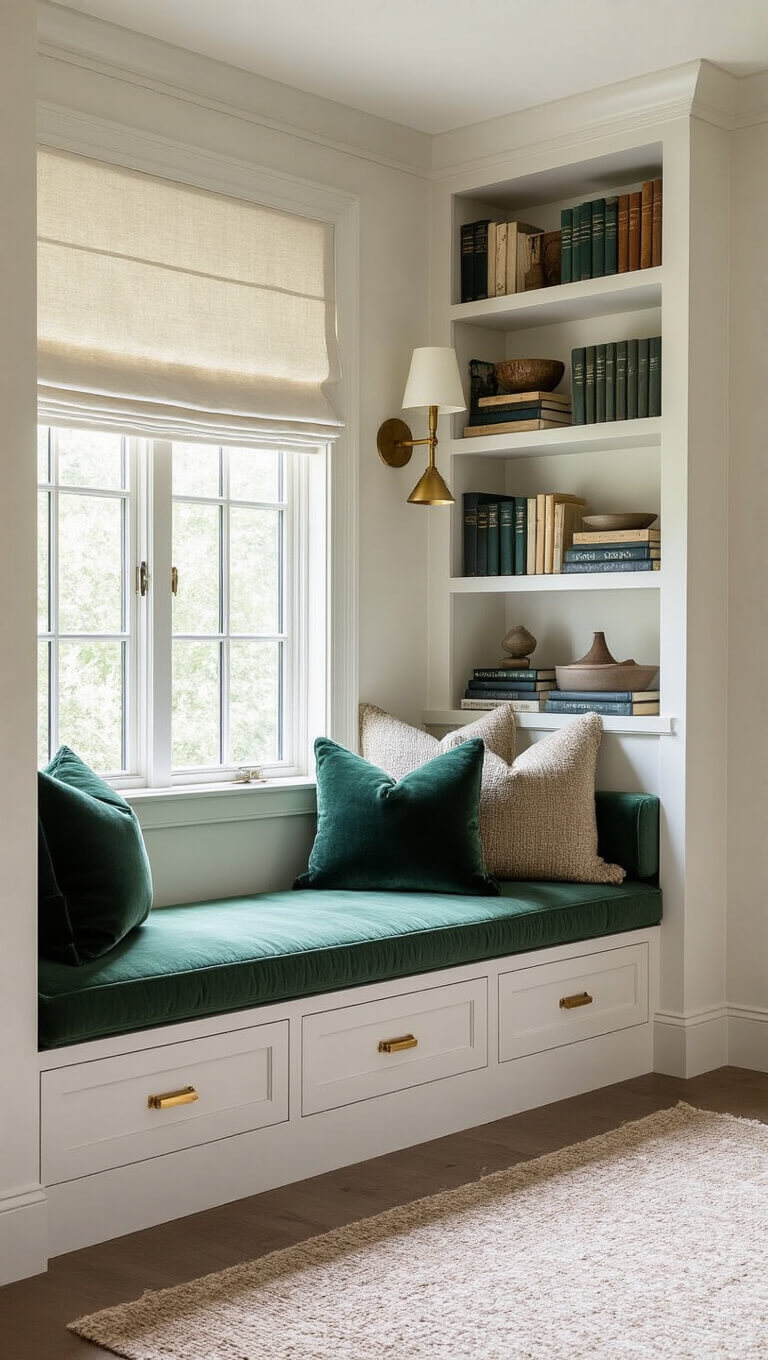
Color Psychology for Small Spaces
Trust me on this — light neutrals are your best friends.
But don’t go completely bland!
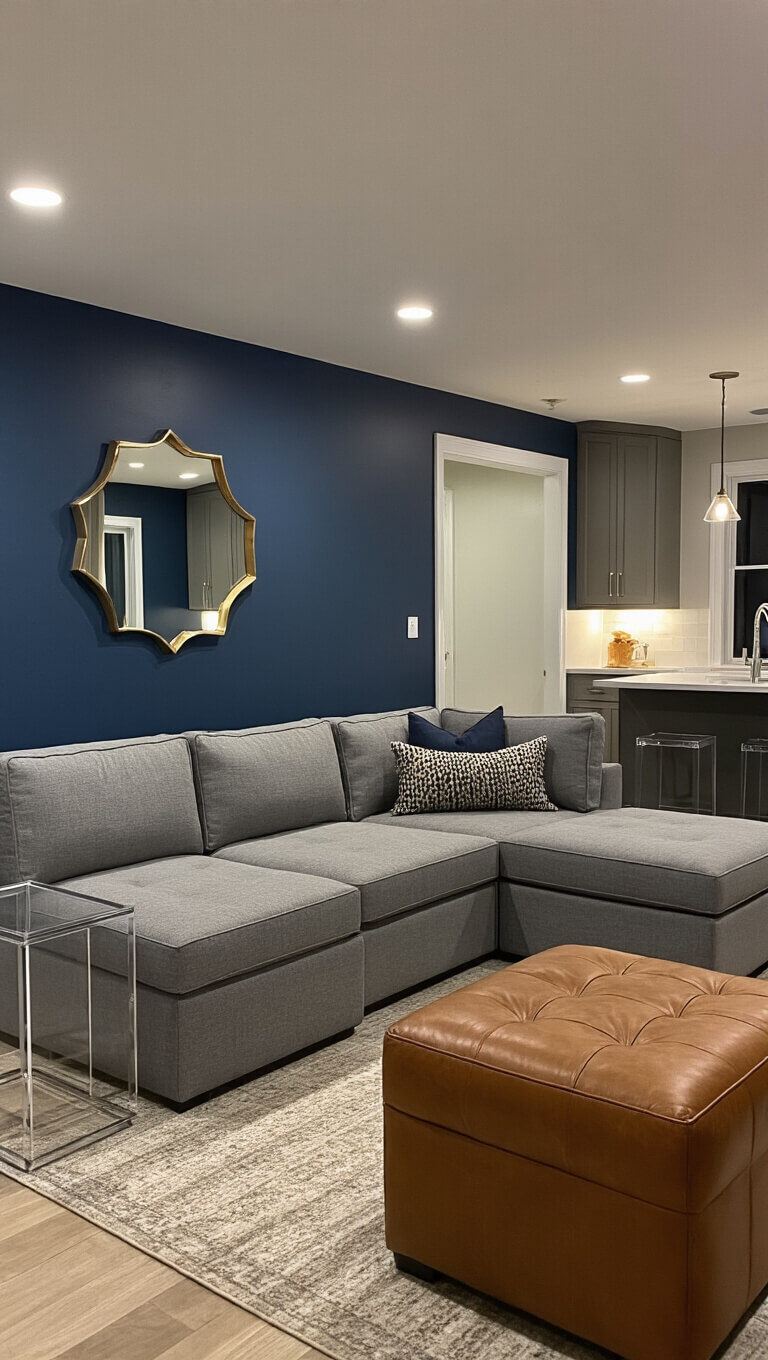
I love adding one bold accent wall or dramatic trim to create personality.
My go-to combination: Soft greige walls with navy or forest green accents.
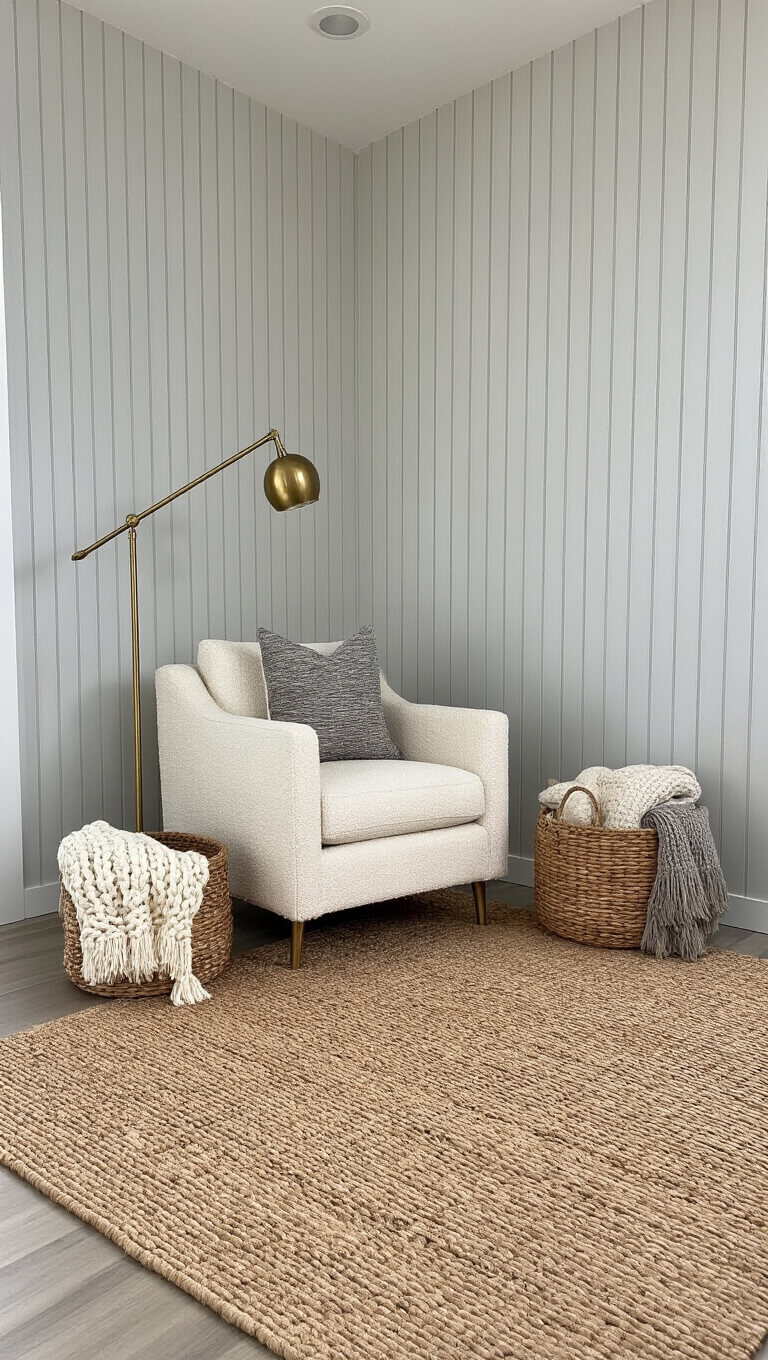
The Visual Expansion Trick Box
These are my secret weapons:
- Strategically placed mirrors (opposite windows work best)
- Vertical striped patterns to create height
- Glass or lucite furniture to maintain visual flow
- Layered lighting at different heights
Save this article
Enter your email and we'll send it straight to your inbox.
Creating Zones in Tiny Spaces
Even the smallest room deserves distinct areas:
- A cozy seating zone
- A compact reading nook
- A small work station (if needed)
The key? Float your furniture instead of pushing everything against walls.
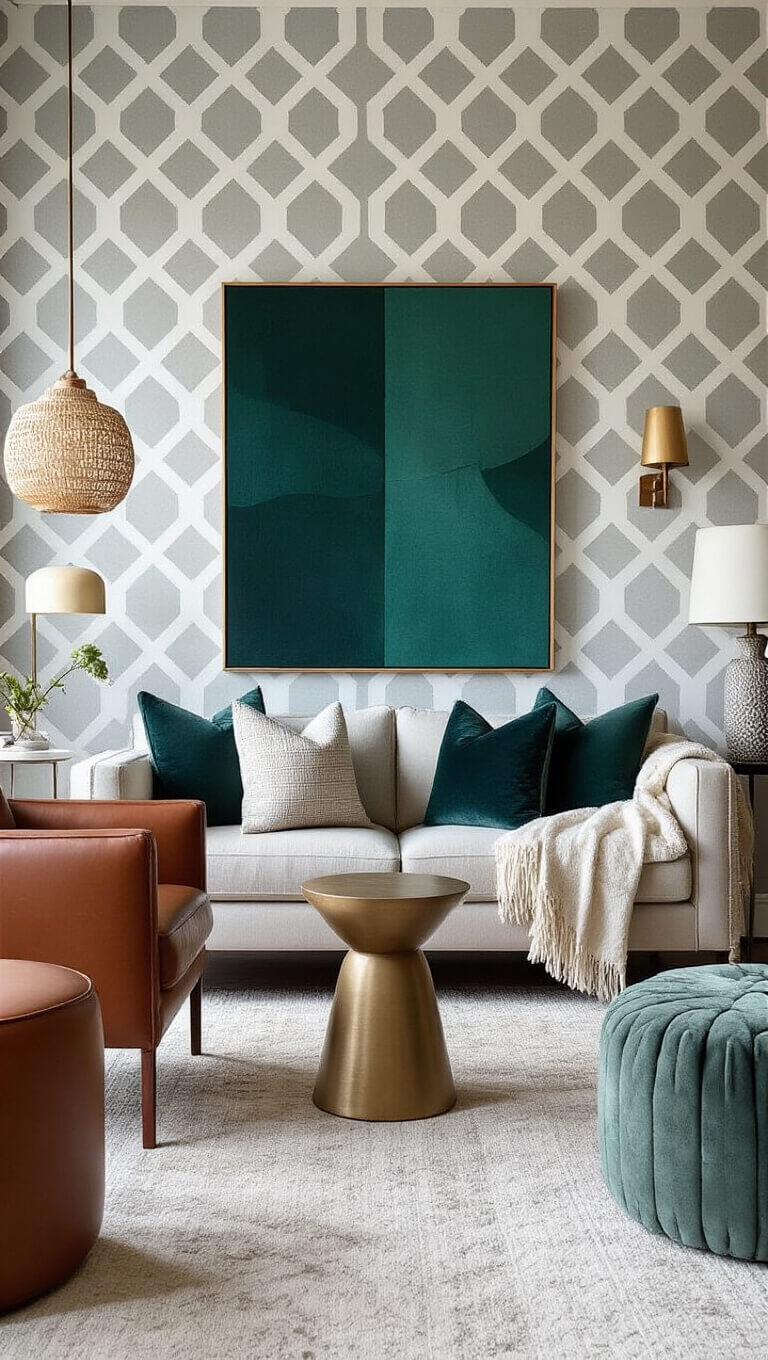
Texture & Pattern Play
Here’s how I bring life to small spaces:
- Mix 2-3 patterns in varying scales
- Layer different textures (smooth, rough, plush)
- Use natural materials for warmth
- Add metallic accents for dimension
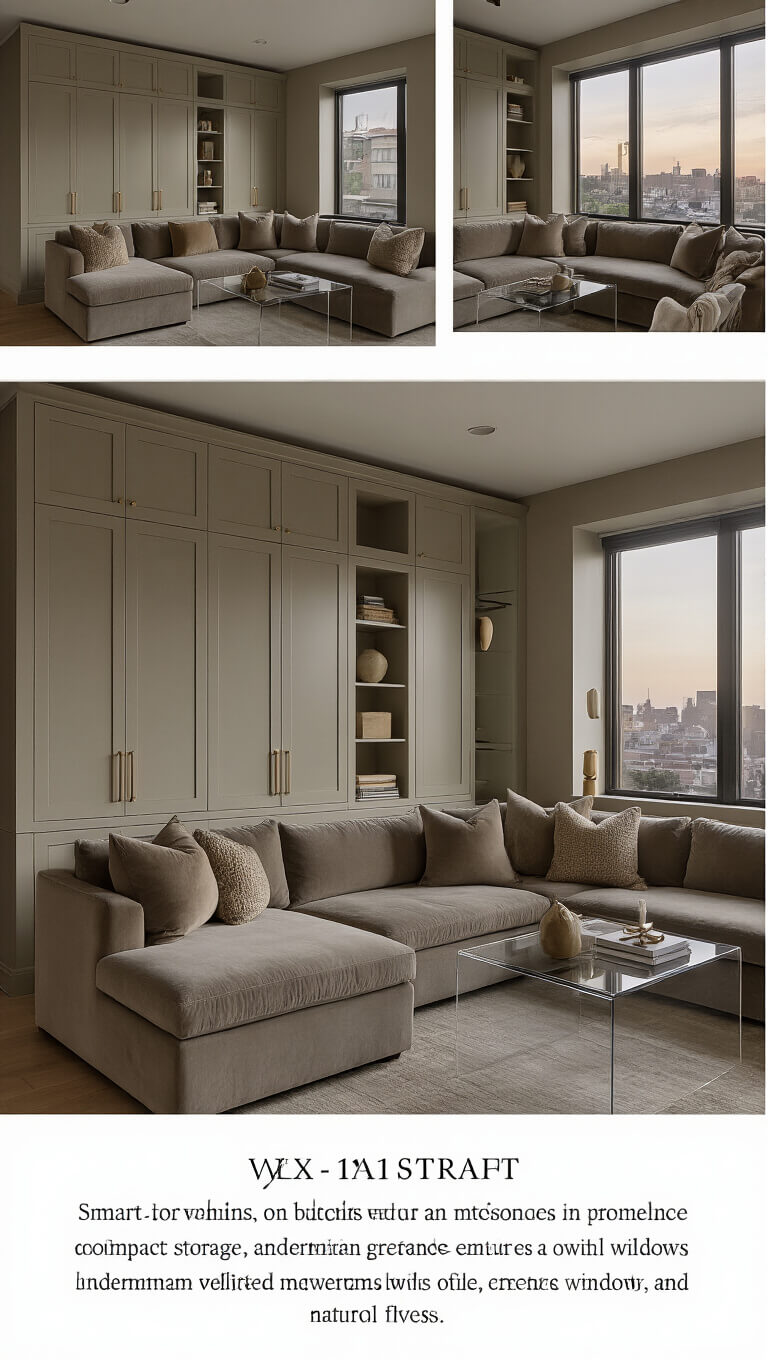
Storage Solutions That Look Tidy
Nobody wants to see clutter in a small space.
I always incorporate:
- Decorative baskets
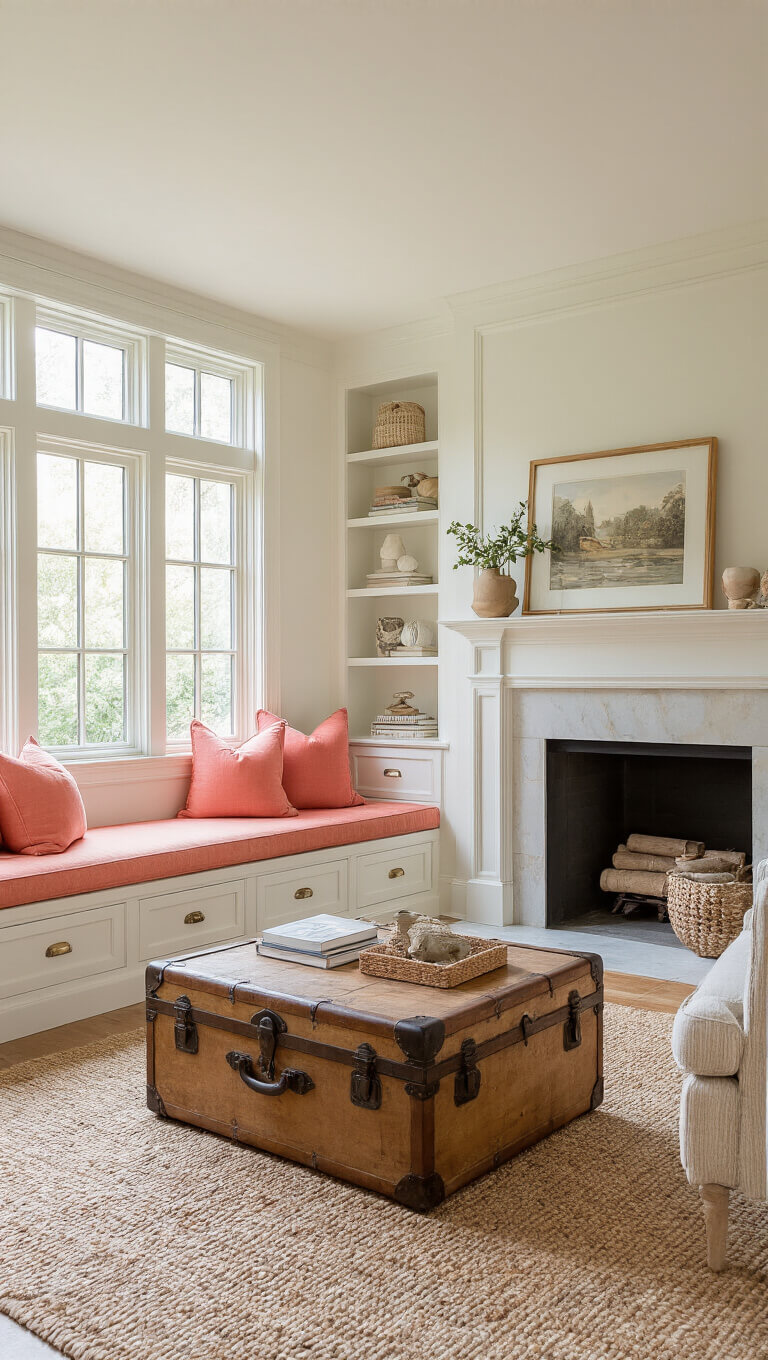
- Vintage trunks as side tables
- Built-in solutions where possible
- Multi-functional furniture pieces
The Final Touch: Styling
Less is more in small spaces.
Choose one statement piece (I love a bold sofa or unique art piece).
Then, add 3-5 carefully chosen accessories that complement without overwhelming.
Remember: Every item should earn its place through both function and beauty.
The trick is to pick one piece you love and let everything else support it. A small living room feels calm when most surfaces stay clear and the few objects on display actually mean something to you.
Save this article
We'll email you the link so you can come back to it.