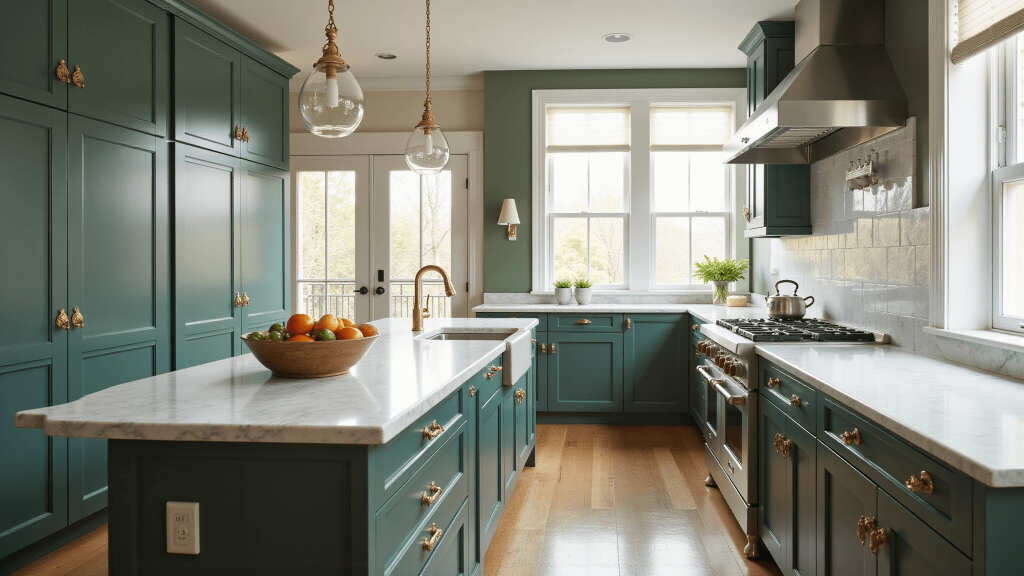
Hey there! I’m Sarah, an interior designer with 15 years of experience updating tiny kitchens into functional powerhouses.
I planned a client’s eight foot kitchen with floor to ceiling cabinets on one wall, and the small room finally held everything. Small kitchen cabinets work when the upper units reach the ceiling and the lower ones stay shallow, so the space reads as tidy instead of tight.
The Secret Sauce to Small Kitchen Cabinets
I’ve seen countless clients struggle with limited cabinet space, but here’s the thing – it’s not about how much space you have, it’s how you use it.
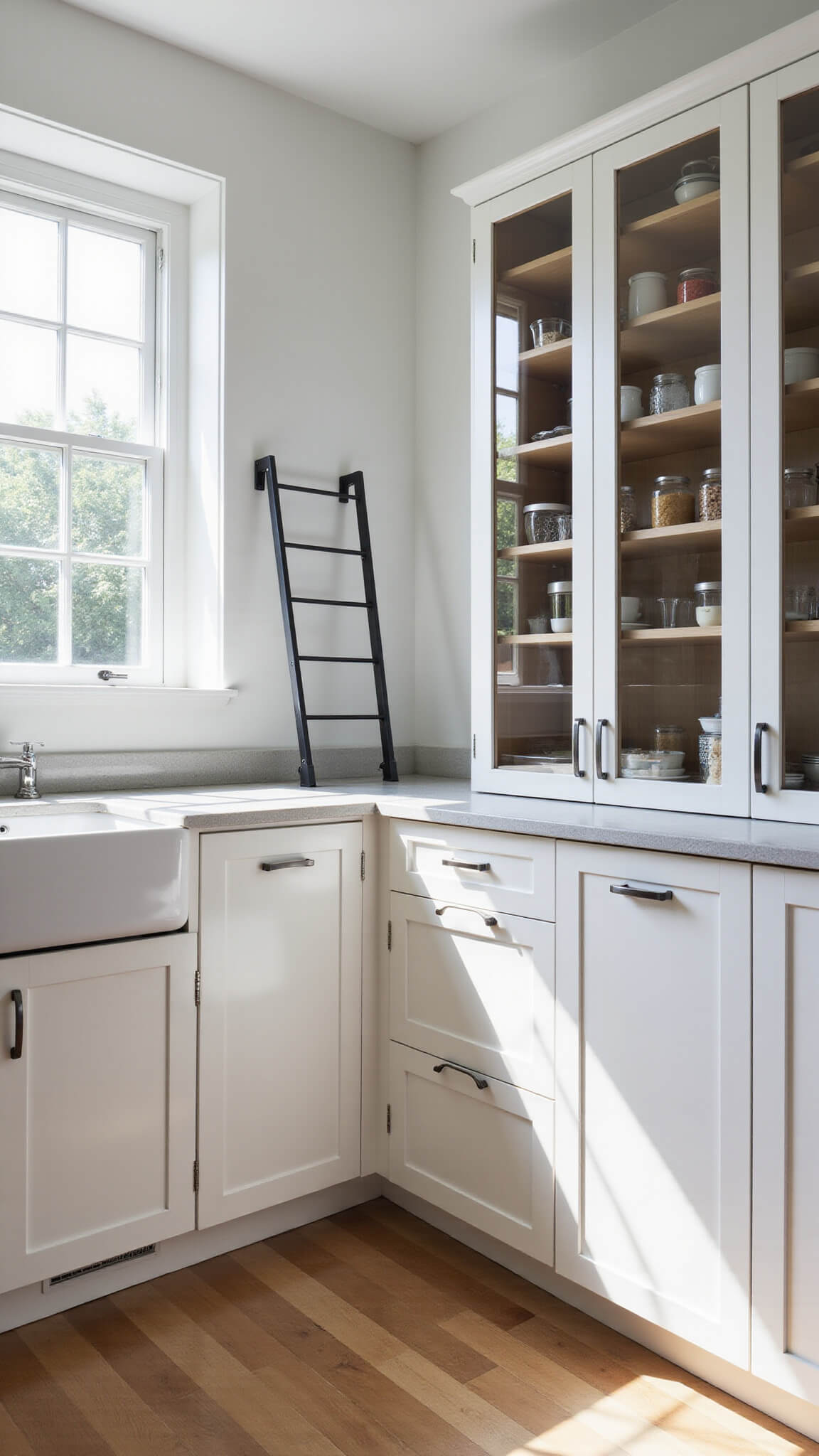
First Things First: Understanding Your Space
Before we dive into solutions, let’s get real about your kitchen:
- Measure every inch (seriously, every inch counts)
- Map out your workflow (cooking zone, prep zone, storage zone)
- List your must-have items (be ruthless here)
Smart Cabinet Solutions That Actually Work
1. Vertical Magic
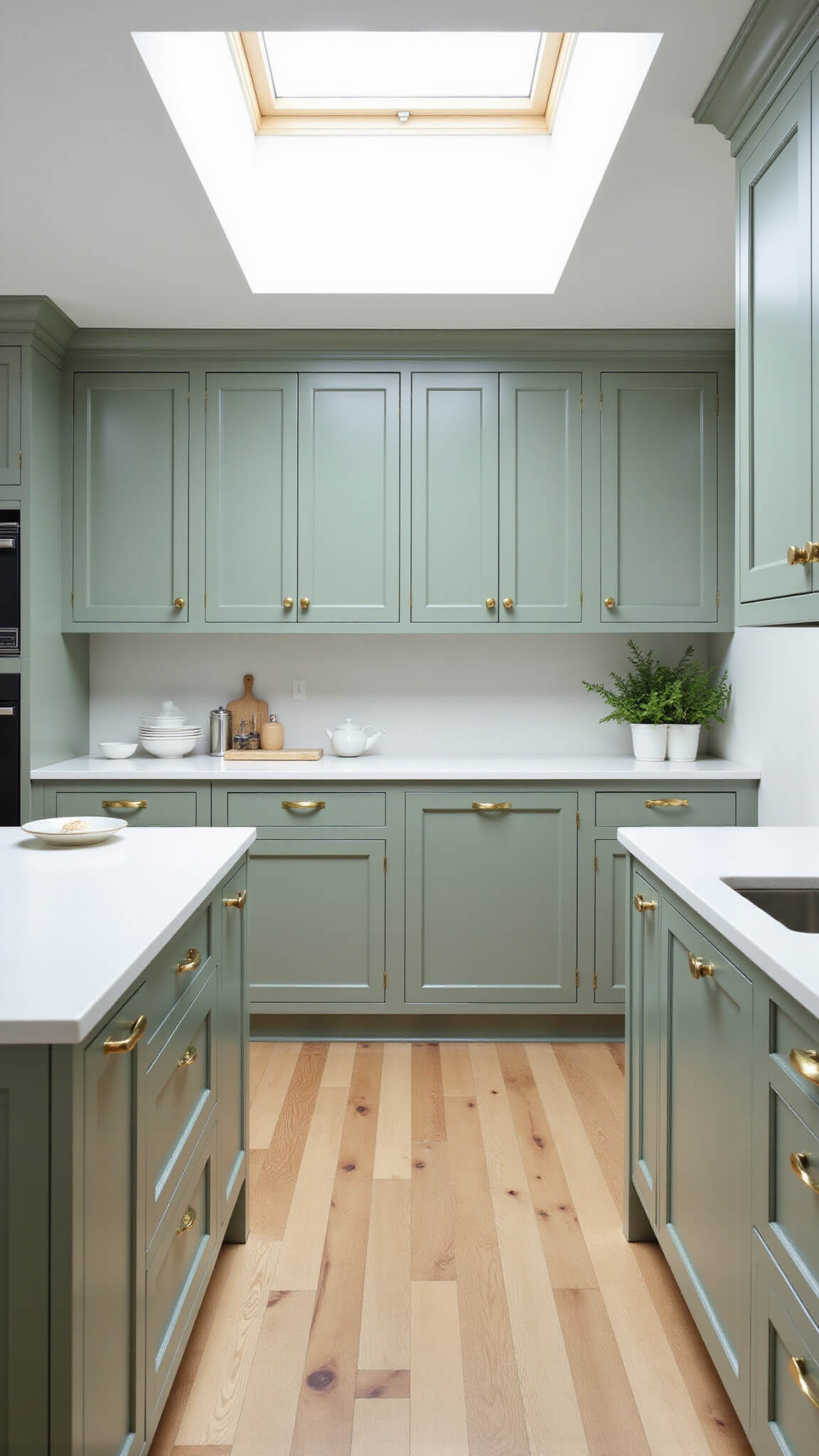
- Install ceiling-height cabinets
- Use door-mounted organizers
- Add pull-out pantry systems
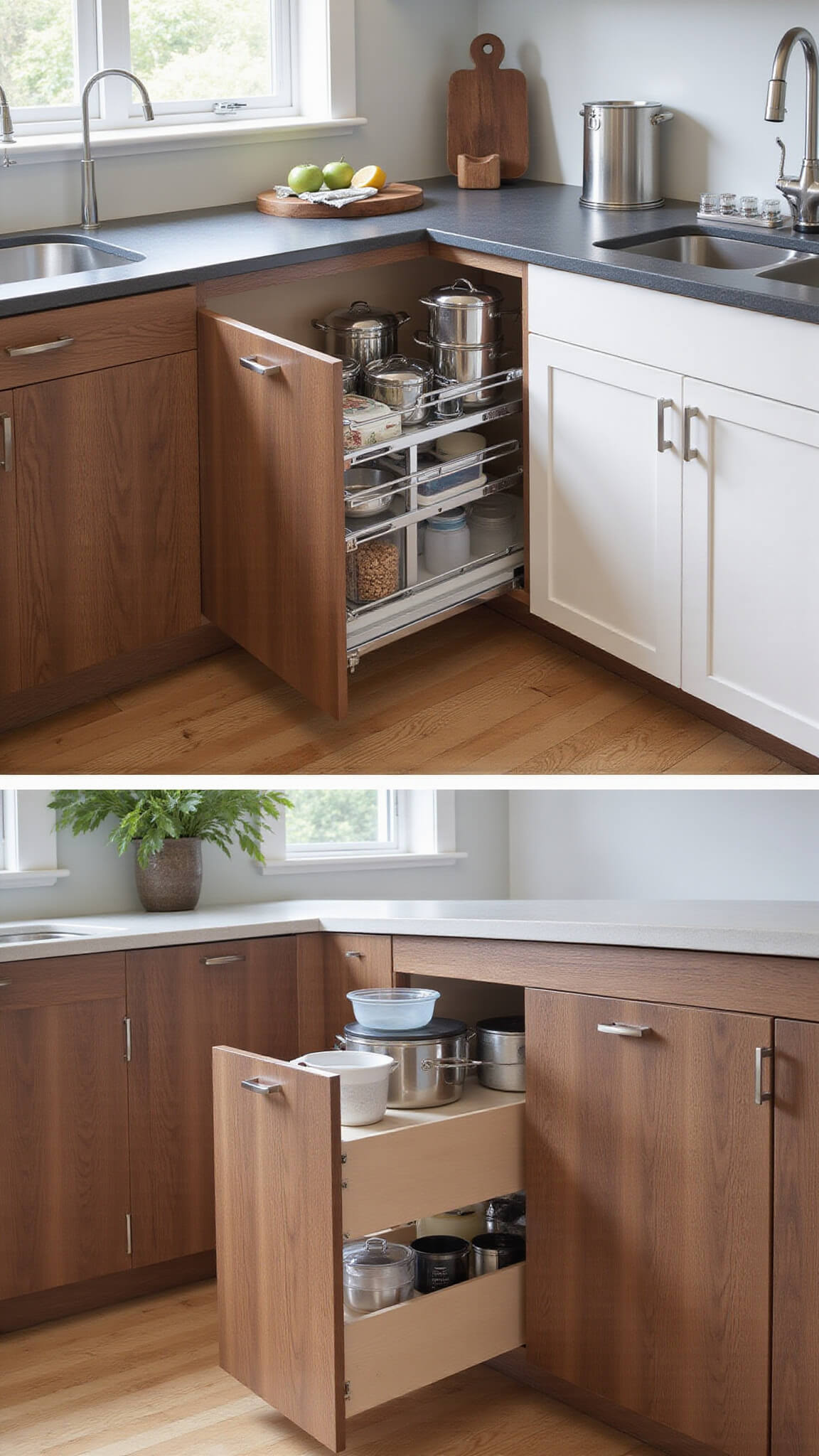
2. Corner Cabinet Tricks
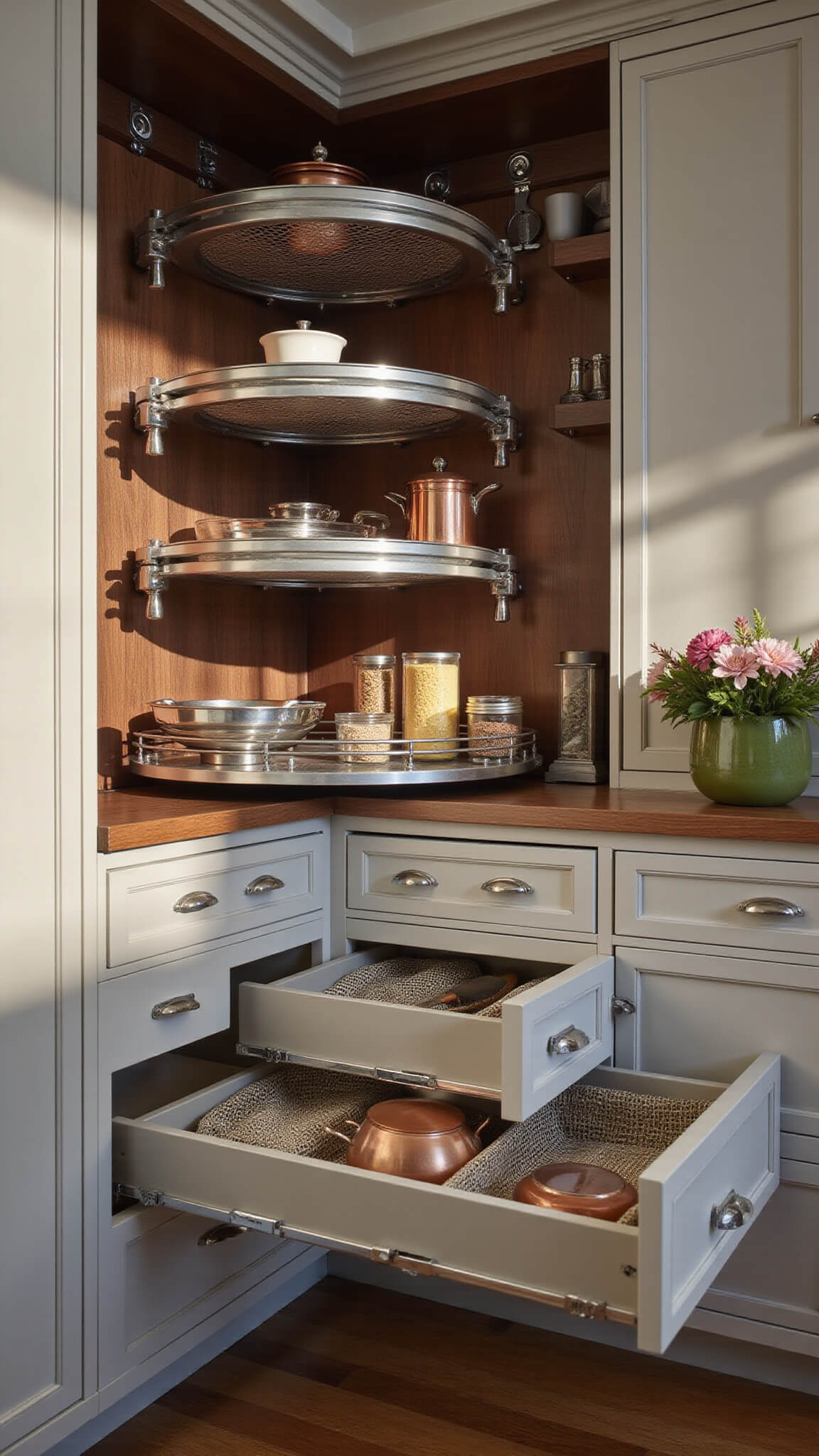
I once transformed a “dead” corner cabinet into a client’s favorite storage spot using:
- Lazy Susan systems
- Pull-out corner organizers
- Diagonal drawer configurations
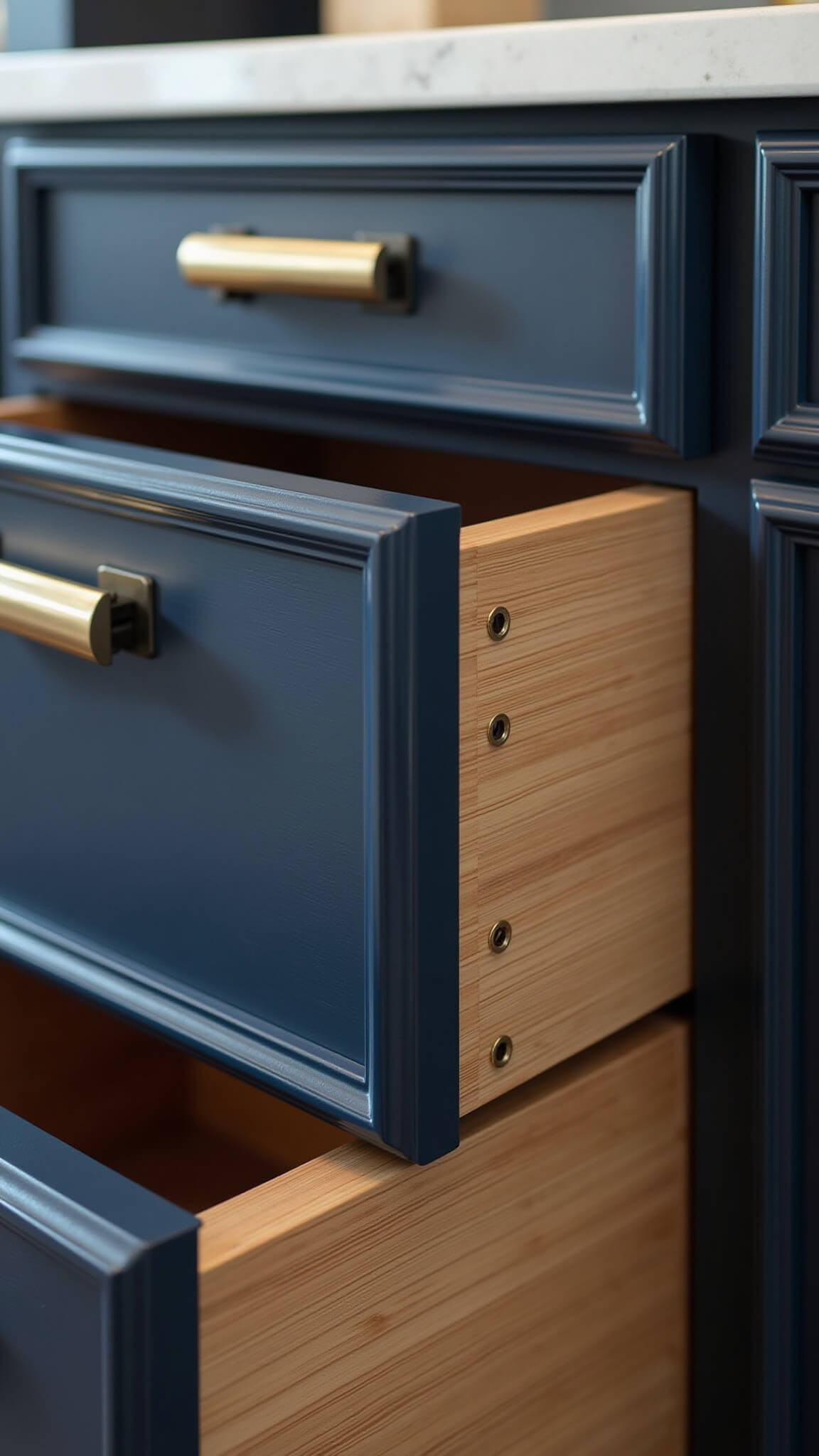
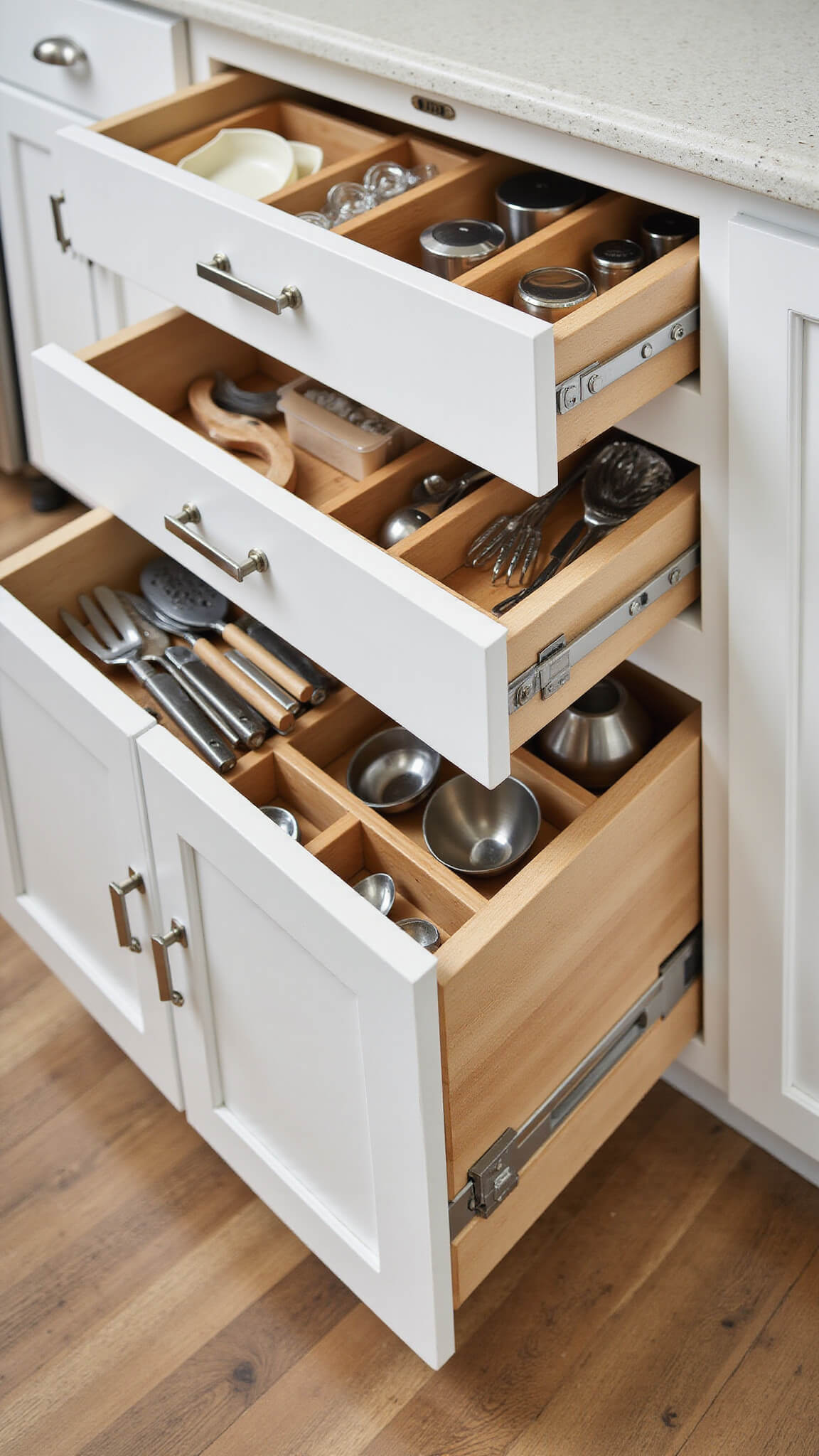
3. Space-Maximizing Hardware
- Soft-close drawers (they’re worth every penny)
- Full-extension slides
- Multi-tiered organizers
Budget-Friendly Options
Let’s talk money – because great storage shouldn’t break the bank:
IKEA SEKTION System:
- Starting at $70 for base cabinets
- Customizable configurations
- DIY-friendly installation
Save this article
Enter your email and we'll send it straight to your inbox.
Home Depot Stock Cabinets:
- Mid-range options ($200-$700)
- Pre-assembled units available
- Quick delivery
Pro Tips From My Design Trenches
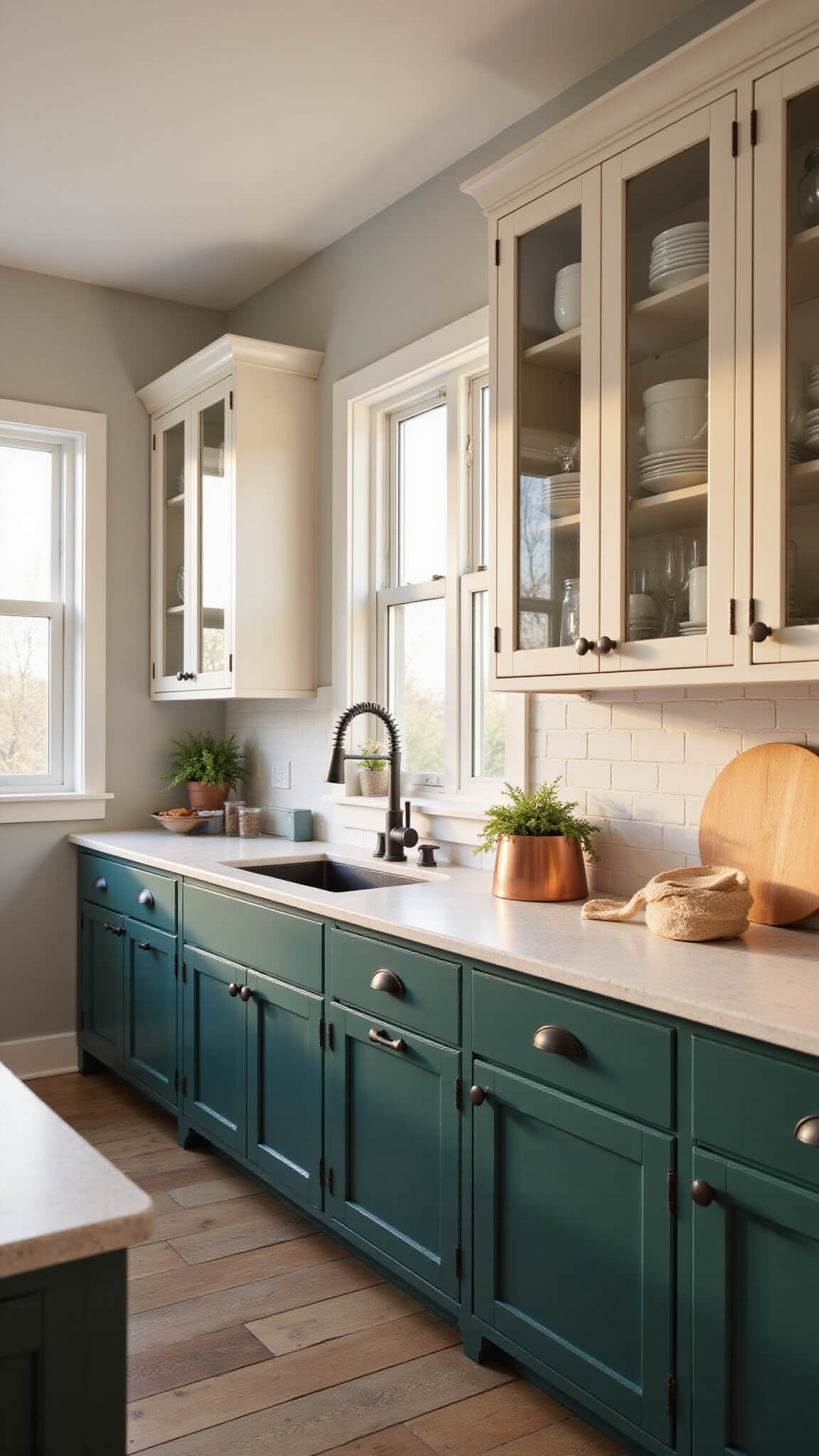
1. Color Matters
- Light colors make spaces feel larger
- Two-tone cabinets add visual interest
- Matte finishes hide fingerprints better
2. Hardware Hacks
- Oversized handles create visual impact
- Integrated pulls save space
- Mixed metals add personality
3. Organization Systems
Here’s what really works:
- Clear containers for pantry items
- Drawer dividers for utensils
- Under-sink organizers
Common Mistakes to Avoid
Trust me, I’ve seen them all:
- Skipping the planning phase
- Ignoring vertical space
- Choosing form over function
The Bottom Line
Small kitchen cabinets don’t have to mean limited storage. With smart planning and the right solutions, you can create a kitchen that works for you, not against you.
Remember: Sometimes the smallest changes make the biggest impact. Start with one area, perfect it, then move on to the next.
Use the toe-kick drawers and the corner unit well. Small kitchen cabinets feel right when the few open shelves hold daily things and the rest stays behind a flat front.
Save this article
We'll email you the link so you can come back to it.