Transitional Bedroom Design: The Ultimate Guide to Blending Classic & Contemporary Styles
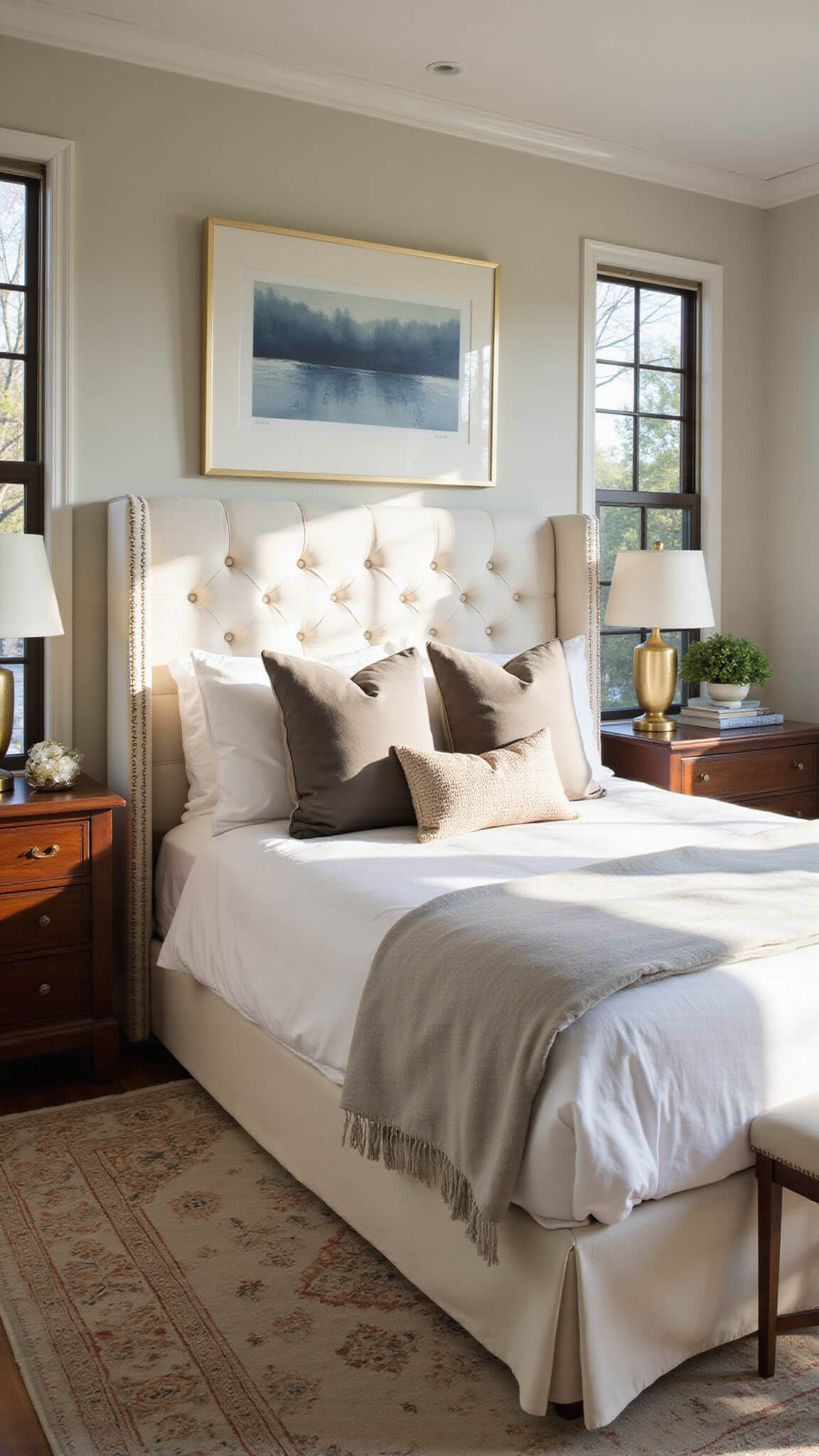
I dressed a client’s bedroom with a soft upholstered headboard and plain wood nightstands, and the room felt settled without being stuffy. A transitional bedroom works when the soft pieces meet one clean line, so the space reads as calm instead of formal.
Why Choose Transitional Style?
Let’s be real – most of us don’t want a bedroom that’s stuck in one era. We want something that feels:
- Timeless yet fresh
- Sophisticated but comfortable
- Personal without being too trendy
The Magic Formula
Here’s my foolproof recipe for nailing transitional bedroom design:
1. The 70/30 Rule
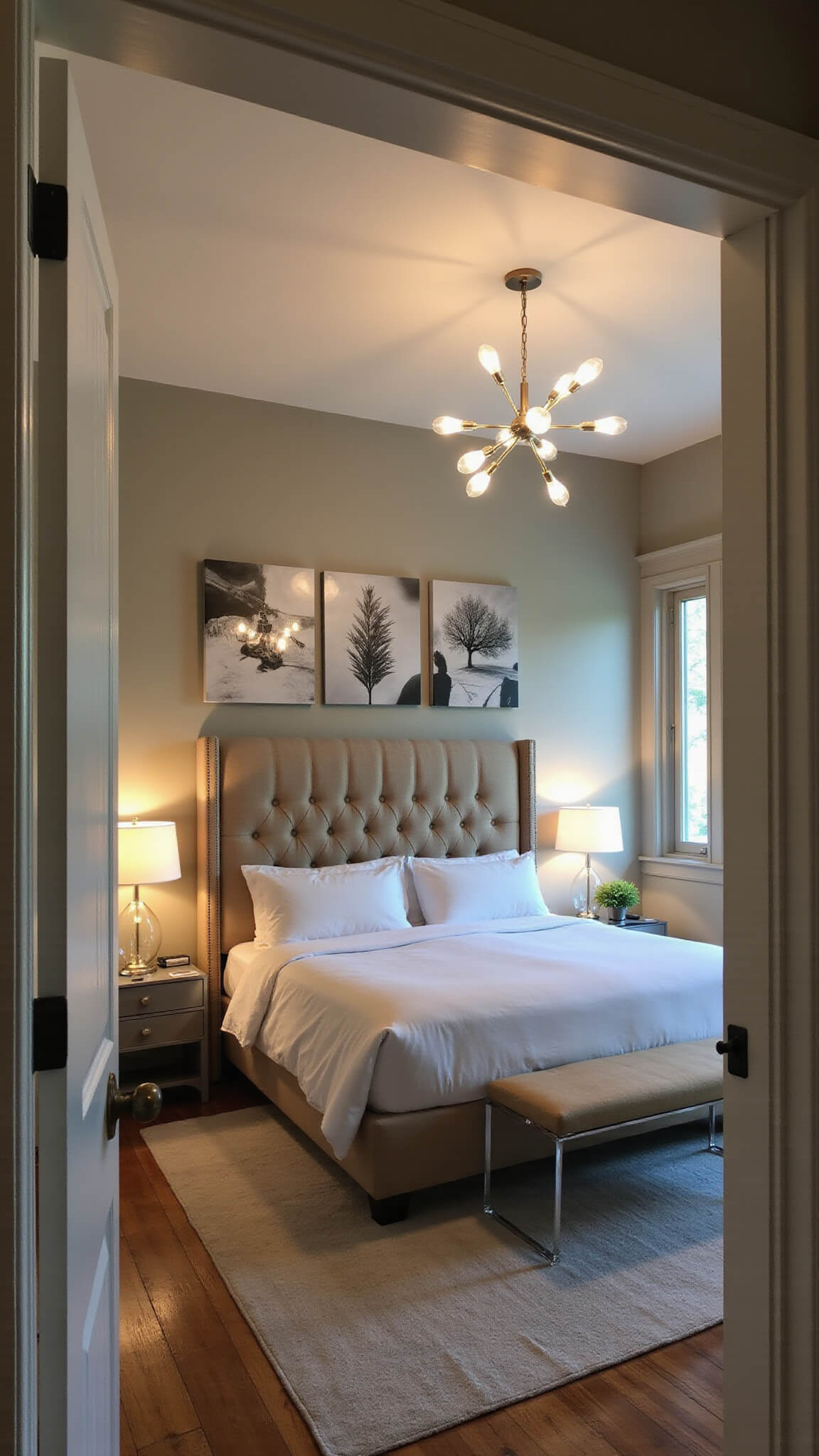
- 70% classic elements (think tufted headboards, traditional moldings)
- 30% modern touches (clean-lined furniture, contemporary art)
Getting Started: The Foundation
Start with these key elements:
Base Colors:
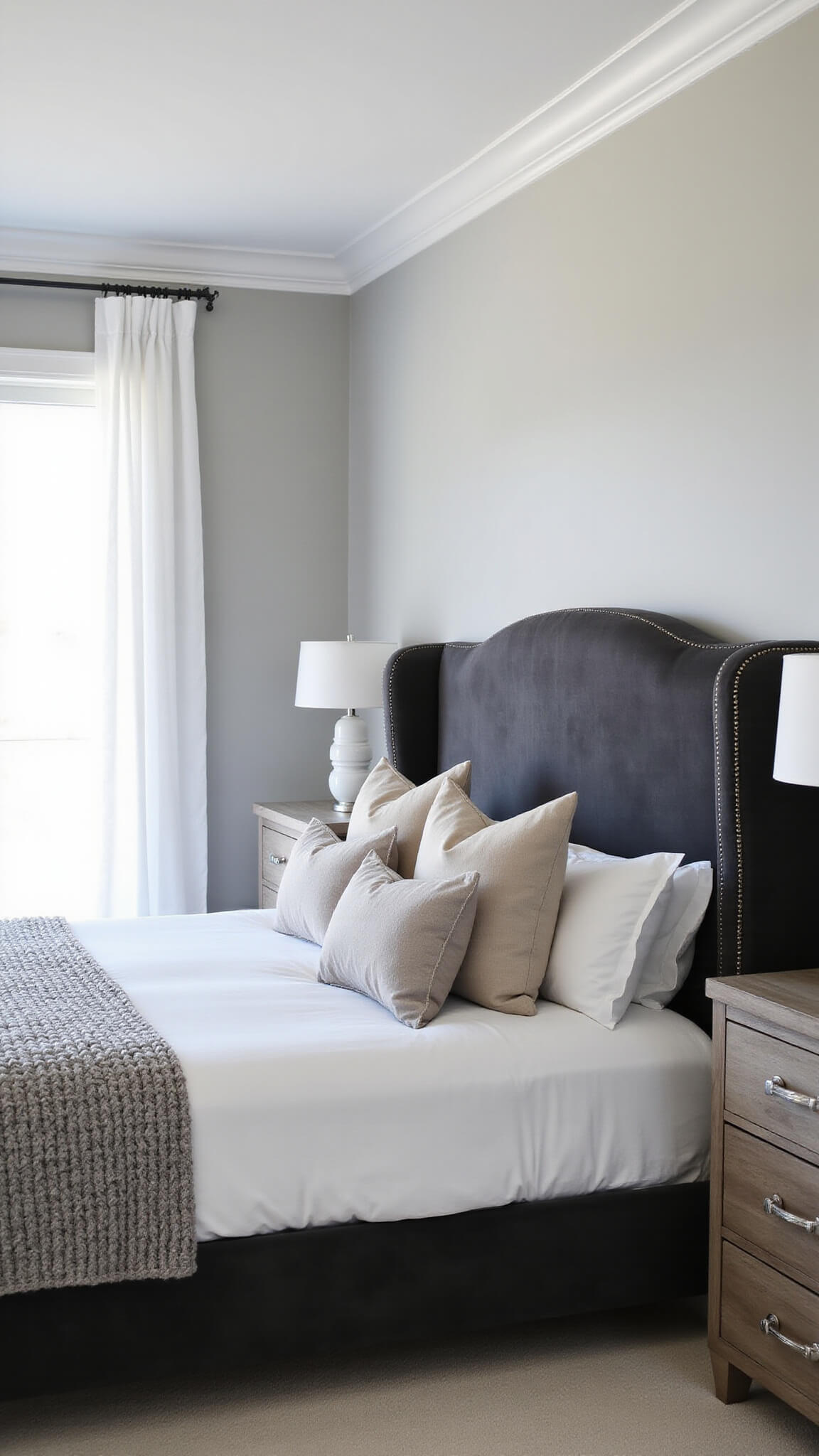
- Warm grays
- Soft taupes
- Creamy whites
- Rich beiges
Pro Tip: I always tell my clients to think “sophisticated neutral” rather than “boring beige.”
Furniture Essentials:
The Bed:
- Upholstered headboard (traditional)
- Platform base (modern)
- Mixed metal accents
Nightstands:
- One traditional piece
- One contemporary piece
- OR Matching transitional pieces with both classic and modern elements
The Art of Layering
This is where the magic happens:
Textiles:
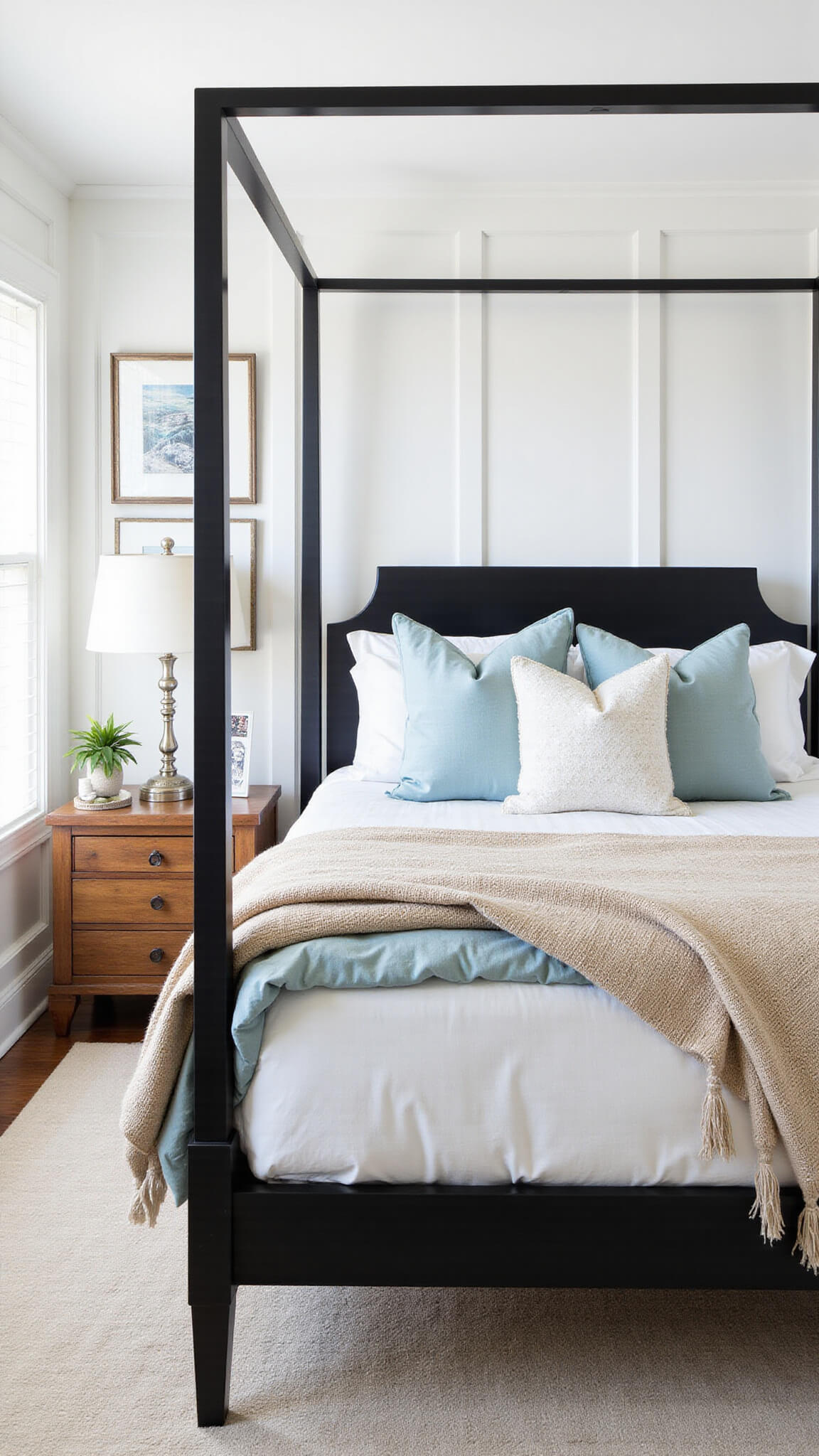
- Base: Crisp white sheets
- Middle: Textured duvet or quilt
- Top: Luxe throw blanket
- Finish: 2-3 decorative pillows
Lighting Layers:
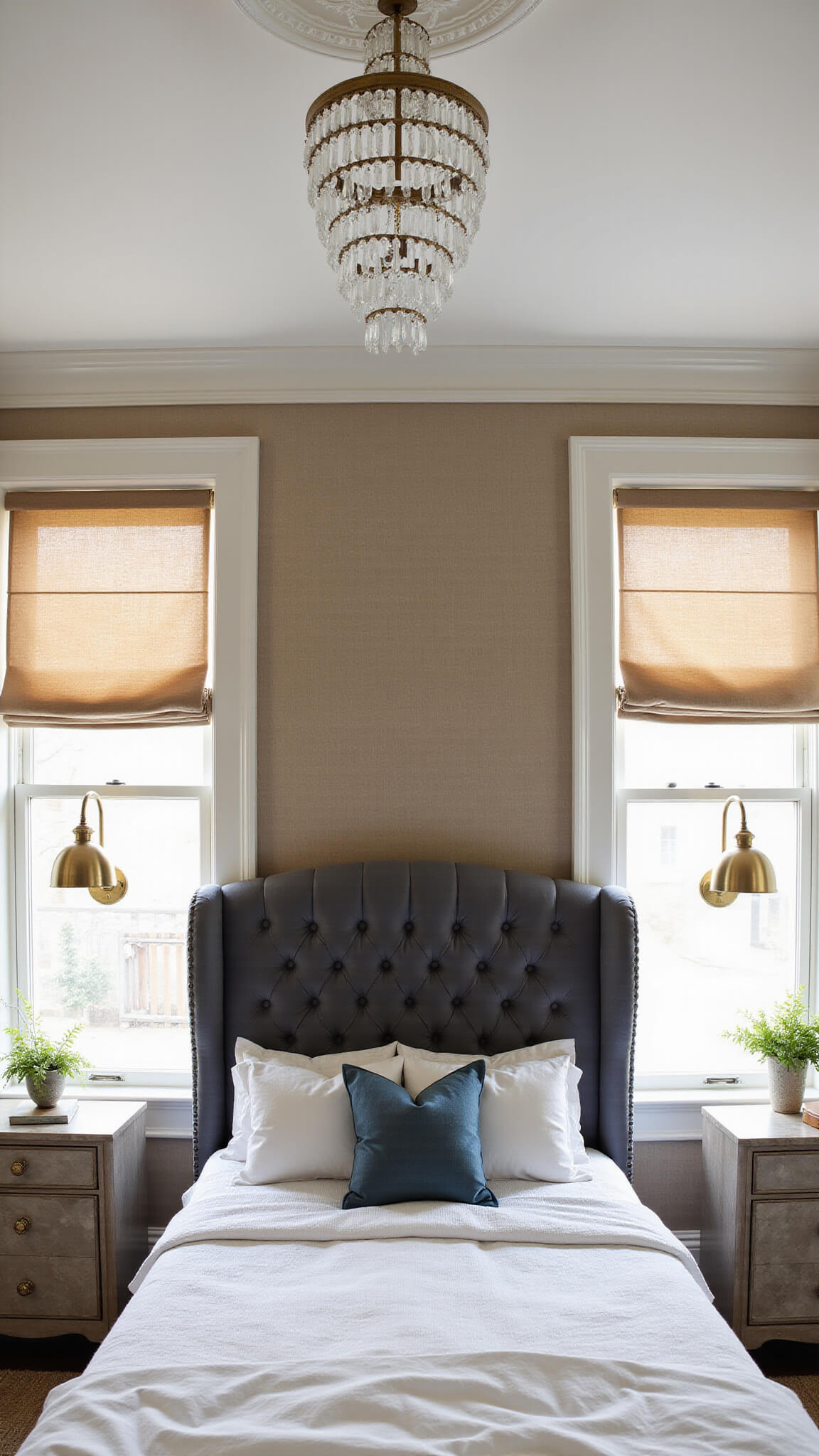
- Ambient (ceiling fixture)
- Task (bedside lamps)
- Accent (wall sconces)

Budget Breakdown
I typically recommend allocating your budget like this:
Essential Investment Pieces ($2,000-5,000):
- Quality mattress
- Well-made headboard
- Durable nightstands
Mid-Range Elements ($1,000-3,000):
- Lighting fixtures
- Window treatments
- Area rug
Accessories & Decor ($500-2,000):
- Art pieces
- Decorative pillows
- Small accents
Save this article
Enter your email and we'll send it straight to your inbox.
Common Mistakes to Avoid
I’ve seen these blunders too many times:
- ❌ Going too matchy-matchy
- ❌ Forgetting about texture
- ❌ Skimping on lighting
- ❌ Overdoing the throw pillows
- ❌ Ignoring scale and proportion
My Secret Styling Tips
1. The Power of Threes
Group accessories in sets of three with varying heights.
2. Mixed Metals Rule
Combine no more than 2-3 metal finishes (I love brass + black).
3. Texture is Everything
Layer at least 3 different textures in your bedding.
Seasonal Updates
Keep your transitional bedroom fresh year-round:
Spring/Summer:
- Lighter throws
- Botanical prints
- Natural textures
Fall/Winter:
- Velvet accents
- Warmer metals
- Layered textiles
Final Thoughts
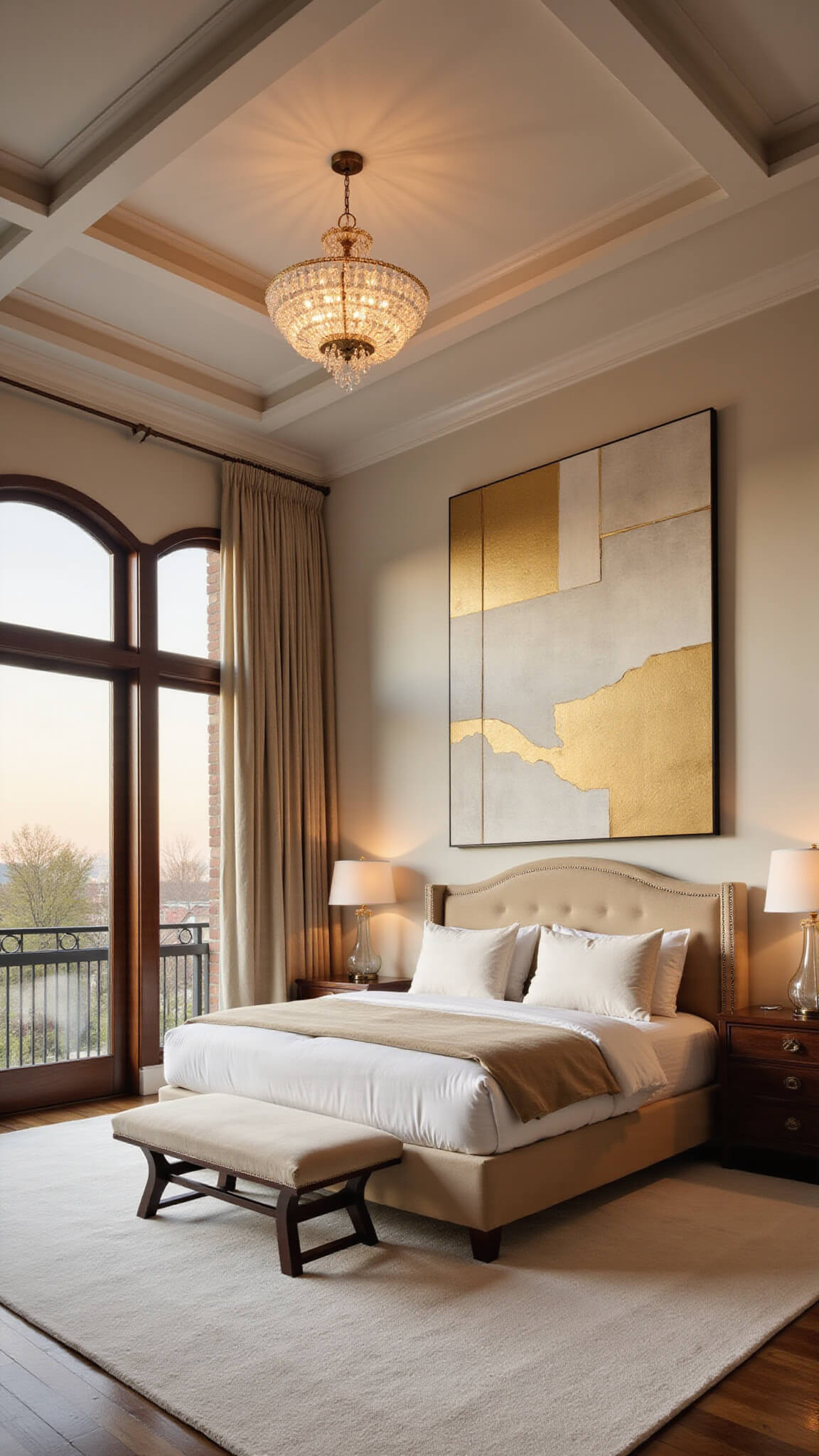
Remember: Transitional style isn’t about perfection – it’s about balance.
The best transitional bedrooms tell your personal story while maintaining that perfect blend of timeless and current elements.
Keep the palette close and the patterns few. A transitional bedroom feels right when the one texture you choose actually relates to the rest of the room.
Save this article
We'll email you the link so you can come back to it.